
Finding the Perfect Fit: Everything You Need to Know About Hearing Aid Trials
Joy of Hearing Team
Joy of Hearing Clinical Team
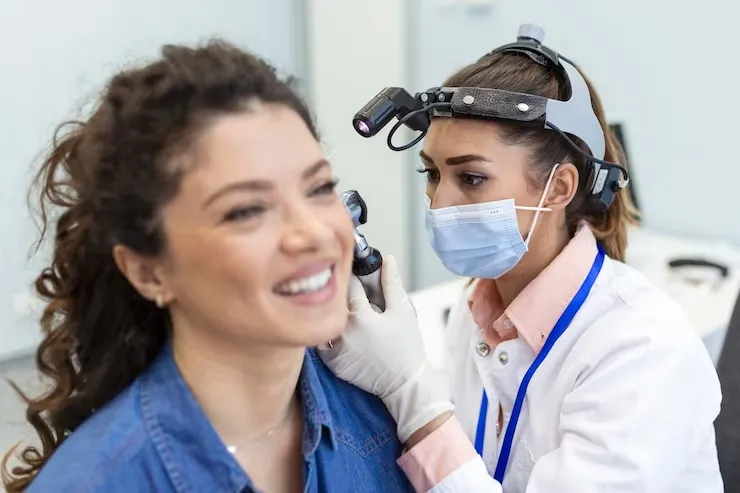
The transition from acknowledging a hearing deficit to actively pursuing auditory rehabilitation is a profound medical and psychological journey. For individuals experiencing auditory deprivation, adopting a hearing instrument is rarely a simple, instantaneous fix. The brain, which has systematically adapted to a muted acoustic environment, requires time and precise clinical guidance to re-learn how to process complex soundscapes. This primary period of neuroplastic adaptation is managed through a structured clinical process known as the hearing aid trial.
A hearing aid trial is not merely a “test drive” of consumer electronics; it is an essential, closely monitored medical intervention phase. It allows the audiologist to evaluate the efficacy of the prescribed amplification, ensuring that the technology not only meets objective acoustic targets but also provides functional, real-world benefit to the patient. Understanding the specific steps involved in this process demystifies the experience and sets the stage for a successful rehabilitation outcome.
Step 1: Comprehensive Audiologic Diagnostics
The foundation of any successful hearing aid fitting is an exact, clinically rigorous assessment of the entire auditory system. A basic pass/fail hearing screening is wholly inadequate for prescribing amplification. Instead, a Doctor of Audiology or a licensed hearing healthcare professional will conduct a comprehensive diagnostic evaluation.
This battery of tests begins with pure-tone audiometry, determining the absolute lowest decibel level the patient can hear across a wide spectrum of frequencies, typically ranging from 250 Hz to 8000 Hz. This data maps the exact configuration of the hearing loss. Following this, speech audiometry is performed to establish Speech Reception Thresholds (SRT) and Word Recognition Scores (WRS). These tests are vital; they reveal not just how loud sound needs to be, but how clearly the auditory nerve and brain can process complex phonetic information once the volume is sufficient.
Finally, objective physiological measures such as tympanometry and acoustic reflex testing are utilized to assess the structural integrity of the middle ear system. This ensures there are no underlying medical pathologies, such as fluid or ossicular fixation, that require surgical intervention prior to fitting a device.
Step 2: Interpreting the Audiogram and Establishing Candidacy
Once the diagnostic data is collected, the clinician constructs an audiogram—a visual graph detailing the exact nature, degree, and symmetry of the hearing impairment. During the consultation, the audiologist translates this highly technical data into functional reality.
For instance, a patient with a precipitous high-frequency sensorineural loss will often struggle immensely with consonant clarity (sounds like “s,” “th,” “f”) while retaining normal low-frequency hearing (vowel sounds). This explains the common patient complaint: “I can hear people talking, but I cannot understand what they are saying.” By mapping the audiogram onto the “speech banana”—the acoustic region where human speech occurs—the clinician visually demonstrates why specific communicative breakdowns are happening.
This step is primarily about managing expectations. The clinician establishes realistic goals for the trial, explaining what amplification can achieve (restoring audibility) and what its limitations are (it cannot cure the underlying neural damage).
Step 3: Prescriptive Technology Selection and Acoustic Coupling
With the diagnosis established, the clinician and patient collaboratively select the appropriate technology. This is a multi-faceted clinical decision that extends far beyond brand preference.
Processing Power: The clinician evaluates the patient’s cognitive load and lifestyle demands. A patient who frequents highly complex acoustic environments, such as large boardrooms or noisy restaurants, will require advanced Digital Signal Processing (DSP) with aggressive noise-reduction algorithms and highly directional microphone arrays. A patient with a quieter, home-bound lifestyle may succeed with a less complex processing tier.
Form Factor and Acoustic Coupling: The physical style of the device (BTE, RIC, or Custom ITE) is selected based on anatomical constraints and manual dexterity. Equally important is the acoustic coupling—how the device physically interfaces with the ear canal. The audiologist must decide between an open-fit silicone dome, which prevents the occlusion effect for mild losses, or a custom-molded acrylic earpiece with specific venting, which is required to prevent feedback (whistling) in severe losses.
Step 4: The Initial Fitting and Objective Clinical Verification
The initial fitting appointment is where the prescriptive theory is put into practice. The hearing aids are physically placed on the patient, and the software is programmed according to the audiometric data. However, programming alone is insufficient.
The gold standard of audiologic care demands objective verification through Real-Ear Measurement (REM). Because every human ear canal possesses a unique volume and resonant frequency, the audiologist must place a microscopic probe tube deep into the canal alongside the hearing aid. A calibrated speech signal is played, and the probe measures the exact Sound Pressure Level (SPL) reaching the tympanic membrane. The clinician then micro-adjusts the hearing aid’s output until it perfectly matches validated clinical targets. This ensures the device is neither dangerously loud nor ineffectively soft.
Upon initial activation, patients frequently report that sounds are overwhelmingly loud, “tinny,” or sharp. This is a normal neurological reaction. The brain has been starved of high-frequency input for years; when it is suddenly reintroduced, the auditory cortex hypersensitizes the input. The clinician will often under-fit the prescription slightly at the initial appointment, setting an acclimatization program that gradually increases the volume to the target level over several weeks.
Step 5: Neuroplasticity and the Real-World Trial
Following the fitting, the patient enters the active trial phase, taking the devices into their daily life. This period is heavily reliant on neuroplasticity—the brain’s ability to reorganize itself by forming new neural connections.
Patients are instructed to wear the devices consistently, starting in quiet, one-on-one environments and gradually progressing to more complex listening situations. Consistent wear time is mandatory; intermittent use prevents the auditory cortex from adapting, prolonging the sensation that the devices are unnaturally loud.
During this phase, patients may experience auditory fatigue. Processing new, rich soundscapes requires significant cognitive energy. Patients are encouraged to take short breaks if overwhelmed but to persist with daily use to build auditory endurance. They are advised to practice active listening, such as reading aloud or tracking conversations in moderate background noise, to accelerate the brain’s adjustment.
Step 6: Data-Driven Feedback and Clinical Fine-Tuning
Typically, the patient returns for a follow-up appointment after one to two weeks. This session is critical for fine-tuning the prescription based on real-world data.
Modern hearing instruments are equipped with sophisticated datalogging capabilities. The devices record the average daily wear time, the acoustic environments the patient encountered (e.g., quiet, speech in noise, wind), and how often the patient manually adjusted the volume.
The audiologist combines this objective data with the patient’s subjective reports. If a patient notes that kitchen appliances are painfully loud, the clinician can isolate the specific frequency band responsible and adjust the maximum power output (MPO) or compression ratios without compromising the gain required for speech intelligibility. This iterative process of feedback and adjustment is the core of a successful trial.
Step 7: Finalizing the Prescription and Long-Term Aural Rehabilitation
As the trial concludes, the patient should experience a marked improvement in functional communication and a significant reduction in listening effort. Once the physical fit is secure and the acoustic programming is optimized, the hearing aids are officially finalized.
However, the dispensing of the devices is merely the beginning of long-term aural rehabilitation. Hearing loss is a progressive condition. Routine audiometric monitoring is required to track changes in thresholds, and the hearing aids must be reprogrammed periodically to match these changes. Additionally, the clinician provides ongoing education regarding device maintenance, wax management, and the use of supplemental assistive listening devices.
In many cases, the audiologist will recommend structured auditory training programs or refer the patient to a speech-language pathologist to enhance speech reading skills and improve auditory memory, ensuring the patient maximizes the benefit of their neural prosthesis.
Joy of Hearing: A Clinically Trusted Audiology Provider
Choosing the right clinical partner is as important as selecting the right technology. Joy of Hearing is a dedicated provider of comprehensive audiology and speech pathology services, committed to delivering evidence-based, patient-centered care. Our clinical approach ensures that every individual receives a bespoke rehabilitation plan tailored to their unique auditory profile.
Diagnostic Excellence: Joy of Hearing mandates comprehensive, clinically robust auditory evaluations. We utilize state-of-the-art diagnostic equipment to establish a precise understanding of your hearing health, moving far beyond basic screenings to deliver accurate medical insights.
Advanced Technological Solutions: We remain entirely independent, allowing our clinicians to source and prescribe a vast range of premium hearing instruments from the world’s leading medical device manufacturers. This ensures we can match the exact processing capabilities, form factors, and connectivity features required to meet your specific clinical needs and lifestyle demands.
Highly Personalized Clinical Care: We recognize that auditory rehabilitation is a deeply personal journey. Our clinicians dedicate the time required to understand your specific communicative challenges. We utilize gold-standard verification protocols, including Real-Ear Measurement, to guarantee that your prescriptive fitting is objectively accurate and optimized for speech clarity.
Lifelong Aural Rehabilitation and Support: A successful hearing aid trial is just the first step. Joy of Hearing is committed to your long-term auditory health. We provide extensive follow-up care, routine audiometric monitoring, device maintenance, and comprehensive counseling to ensure you continue to derive maximum clinical benefit from your technology for years to come.
Do not allow untreated hearing loss to diminish your cognitive health or your connection to the world around you. Professional clinical intervention can profoundly alter your trajectory.
10 Tips for Talking to Someone Who Has a Speech or Language Disorder
The Benefits of Post-Fitting Hearing Aid Counseling for First-Time Users
5 Tips for Getting the Most Out of Your Post-Fitting Hearing Aid Counseling Sessions