
Exploring the World of Hearing Aids and Assistive Devices: Types, Functionality, and Benefits
Joy of Hearing Team
Joy of Hearing Clinical Team
Hearing loss is far more than a localized sensory deficit; it is a complex physiological condition that cascades into every facet of an individual’s daily existence. When the auditory system fails to transmit sound signals effectively to the brain, patients experience what is clinically known as auditory deprivation. Over time, this lack of neural stimulation can lead to structural changes within the auditory cortex and has been strongly correlated with accelerated cognitive decline, social isolation, and heightened risks of anxiety and depression. Understanding that hearing impairment is deeply intertwined with overall neurological health is the primary step toward effective rehabilitation.
Fortunately, the fields of audiology, speech-language pathology, and biomedical engineering have converged to produce remarkable technological solutions. We have moved far beyond rudimentary amplification. Today, a highly sophisticated array of digital hearing instruments, surgically implantable systems, and specialized assistive listening devices exists. These medical devices are designed not merely to make sounds louder, but to intelligently restore functional hearing, prioritize speech clarity, and elevate the overall quality of life for individuals experiencing all degrees of hearing impairment.
The Clinical Physiology of Hearing Impairment
Before evaluating the devices designed to treat hearing loss, it is vital to comprehend the clinical nature of the condition itself. The auditory system is incredibly delicate, and impairment generally falls into three distinct anatomical categories: sensorineural, conductive, and mixed hearing loss.
Sensorineural hearing loss involves permanent cellular damage to the stereocilia (the microscopic hair cells) within the cochlea, or degradation of the auditory nerve pathways that transmit electrochemical signals to the brain. This is the most prevalent form of hearing loss, frequently resulting from presbycusis (age-related degeneration), cumulative noise exposure, or ototoxic medications.
Conductive hearing loss occurs when acoustic energy is mechanically obstructed from reaching a healthy inner ear. This can result from excessive cerumen (earwax) impaction, middle ear effusions (fluid accumulation), tympanic membrane perforations, or otosclerosis (fixation of the ossicular chain).
Mixed hearing loss presents as a combination of both sensorineural and conductive elements. Modern audiologic care relies entirely on comprehensive diagnostic testing to pinpoint the exact etiology, severity, and configuration of the hearing loss, ensuring that the prescribed technological intervention is medically appropriate and highly customized.
The Core Components of Modern Hearing Amplification
Contemporary hearing aids are essentially microscopic computers precisely engineered to be worn comfortably on or inside the human ear. While they vary dramatically in their physical footprint and aesthetic design, they all rely on highly advanced internal components to process sound in real-time.
- Microphone Arrays: These highly sensitive transducers capture acoustic energy from the surrounding environment. Advanced clinical devices utilize dual directional microphones, forming complex polar patterns to focus intensely on speech signals arriving from the front while actively suppressing background noise originating from the sides and rear.
- Digital Signal Processors (DSP): The DSP is the processing engine of the hearing instrument. It digitizes the incoming sound wave, analyzing the acoustic environment thousands of times per second. It differentiates between the highly modulated envelope of human speech and the steady-state drone of environmental noise, applying precise, frequency-specific amplification (gain) exactly where the patient’s audiogram indicates a deficit.
- Receivers (Transducers): Once the signal has been shaped and processed, the receiver converts the electrical impulses back into acoustic energy and directs the amplified sound pressure into the ear canal.
- Power Sources: Historically reliant on zinc-air disposable batteries, the industry is rapidly transitioning toward rechargeable lithium-ion power cells, offering patients all-day continuous use without the dexterity challenges of changing tiny batteries.
Comprehensive Breakdown of Hearing Aid Styles
Selecting the correct form factor is a vital clinical decision made collaboratively between the patient and the audiologist. It is dictated by the degree of hearing loss, anatomical constraints of the ear canal, manual dexterity, and acoustic requirements.
Behind-The-Ear (BTE) Hearing Aids
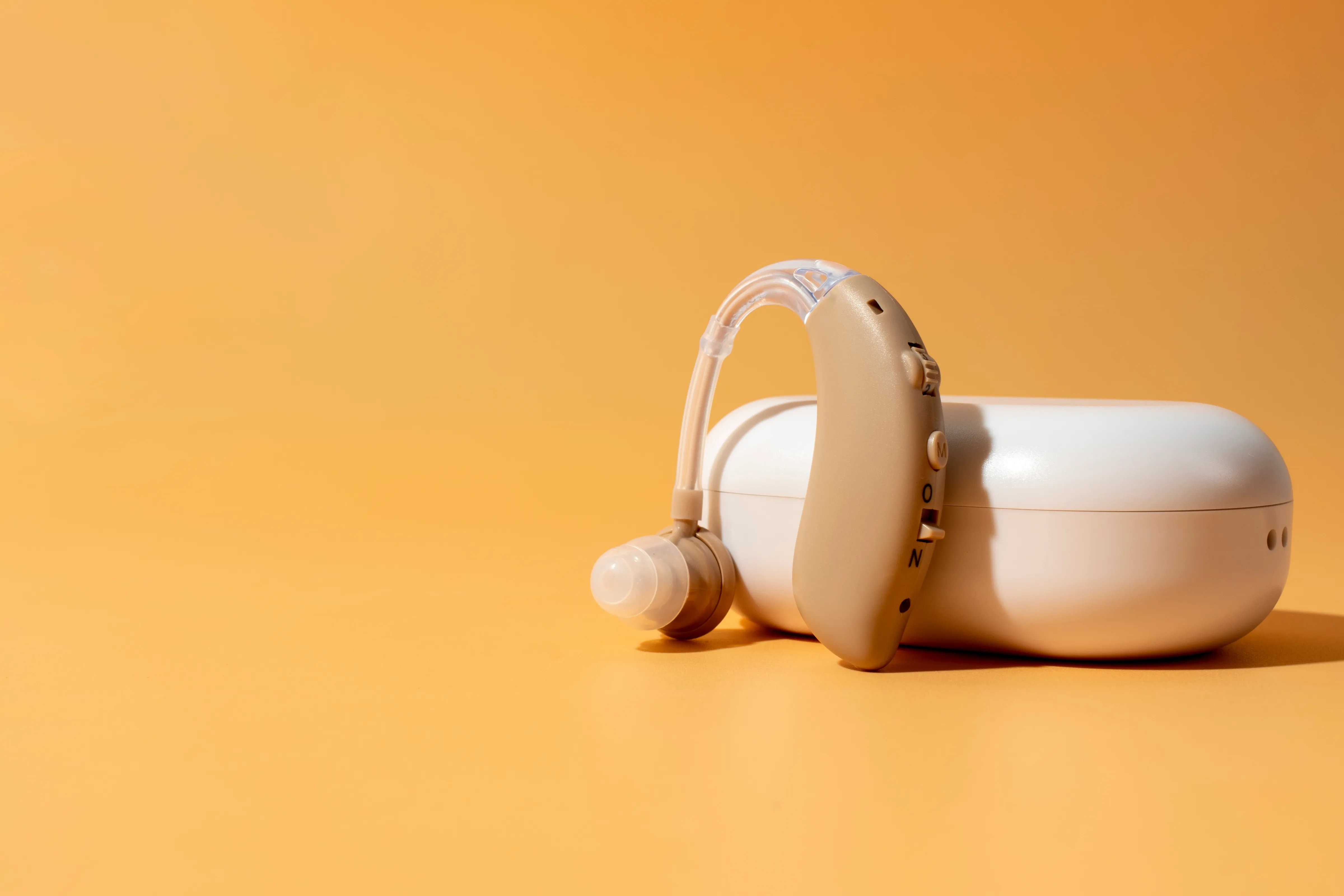
BTE instruments represent the traditional gold standard in audiologic care. All electronic components are securely housed in a robust polymer casing that rests comfortably over the pinna (the outer ear). The amplified sound is directed through a clear acoustic tube into a custom-molded silicone or acrylic earpiece that sits securely in the concha and ear canal.
Clinical Indications and Advantages: BTEs are incredibly versatile, capable of providing the high output levels necessary to treat profound hearing loss. Their larger chassis allows for the inclusion of powerful telecoils, direct audio input options, and extensive tactile controls. Additionally, they are exceptionally durable. BTEs are the undisputed standard of care for pediatric audiology. For a growing toddler with congenital hearing loss, the electronic BTE remains constant, while only the inexpensive custom earmold is replaced as the child’s physical anatomy changes.
Receiver-In-Canal (RIC) and Receiver-In-The-Ear (RITE)
RIC devices currently dominate the global hearing aid market, and for excellent clinical reasons. Visually, they resemble miniature BTEs, but with a fundamental architectural difference: the receiver is physically removed from the behind-the-ear casing and suspended directly into the ear canal. It is tethered to the main processor via an ultra-thin, nearly invisible micro-wire.
Acoustic Advantages: Relocating the receiver into the canal drastically reduces the size of the external device. More importantly, this architecture allows for an “open fit” acoustic coupling. By using a highly vented silicone dome rather than a solid ear mold, low-frequency sounds can enter and exit the ear canal naturally. This effectively eliminates the “occlusion effect”—the highly uncomfortable clinical phenomenon where patients perceive their own voice as hollow, echoing, or booming. RICs are the ideal prescriptive solution for patients presenting with high-frequency sensorineural hearing loss, which is typical of age-related decline.
In-The-Ear (ITE) Hearing Aids
ITE instruments are entirely custom-manufactured. The audiologist takes a physical silicone impression or a 3D digital scan of the patient’s ear. The manufacturer then fabricates a precise acrylic shell that occupies the entire concha bowl, housing all microelectronics within a single, cohesive unit.
Patient Suitability: ITEs offer substantial amplification capabilities suitable for moderate to severe hearing deficits. A primary clinical advantage of the ITE form factor relates to patient dexterity and tactile management. Individuals experiencing peripheral neuropathy, severe arthritis, or visual impairments often find the single-piece design significantly easier to manipulate, insert, and clean compared to handling the delicate wires and small components associated with RIC and BTE styles.
In-The-Canal (ITC), Completely-In-Canal (CIC), and Invisible-In-Canal (IIC)
This category represents the absolute limits of micro-engineering. ITC devices fill only the lower portion of the concha; CIC devices are recessed entirely within the ear canal aperture; and IIC devices sit exceptionally deep, positioned past the second anatomical bend of the ear canal, rendering them completely invisible to the casual observer.
Clinical Considerations: While the aesthetic appeal of invisible technology is immense, these micro-devices carry distinct acoustic and anatomical prerequisites. The patient’s ear canal must be sufficiently wide and straight to safely house the internal components. Clinically, their diminutive size requires compromises: they often lack the physical space required for directional microphone arrays or robust Bluetooth antennas. As a result, they may struggle to provide optimal speech clarity in highly reverberant, noisy environments. They are typically indicated for mild to moderate hearing losses where absolute discretion is the primary patient objective.
Beyond Conventional Amplification: Implantable Medical Devices
When conventional acoustic amplification fails to provide functional speech understanding—often in cases of severe-to-profound sensorineural loss or complex anatomical anomalies—surgically implantable devices offer profound clinical alternatives.
Cochlear Implants
A cochlear implant is a remarkable neuroprosthesis. Unlike hearing aids that amplify sound acoustically, cochlear implants bypass the extensively damaged stereocilia entirely. An external sound processor captures acoustic energy and transmits it magnetically across the skin to an internal receiver-stimulator. This internal component sends electrical impulses along a microscopic electrode array surgically threaded directly into the scala tympani of the cochlea. These impulses directly stimulate the surviving auditory nerve fibers, sending signals to the brain.
Real-World Application: Consider a patient who has experienced sudden, profound sensorineural hearing loss due to viral meningitis, rendering the most powerful BTE hearing aids completely ineffective. A cochlear implant can restore auditory access. However, because the brain receives sound as electrical pulses rather than acoustic waves, extensive postoperative aural rehabilitation with a specialized speech-language pathologist is mandatory to train the auditory cortex to interpret this novel stimulation as meaningful speech.
Bone-Anchored Hearing Systems (BAHS)
For patients suffering from chronic conductive hearing loss (where the cochlea is healthy, but the outer or middle ear cannot transmit sound) or single-sided deafness, a BAHS is a transformative intervention. A small titanium fixture is surgically implanted into the mastoid bone behind the ear. An external processor attaches to this abutment, capturing sound and converting it into mechanical vibrations. These vibrations travel through the dense cranial bone, bypassing the dysfunctional middle ear, and directly stimulate the healthy cochlea on the ipsilateral or contralateral side.
Enhancing the Auditory Environment: Assistive Listening Devices (ALDs)
Even with optimally fitted premium hearing aids, patients may still experience degraded speech intelligibility in highly complex, acoustically hostile environments, such as echoing lecture halls, crowded restaurants, or over long distances. Assistive Listening Devices (ALDs) bridge this gap by drastically improving the signal-to-noise ratio.
Frequency Modulation (FM) and Digital Remote Microphone Systems
These systems involve a discrete remote microphone worn by the primary speaker (e.g., a teacher, a spouse at a noisy dinner). The speaker’s voice is captured at the source and transmitted wirelessly via radio frequency or digital signal directly into the listener’s hearing aids. This effectively circumvents the degrading effects of distance, ambient background noise, and room reverberation, delivering a pristine speech signal directly to the tympanic membrane.
Induction Loop Systems
Many public access spaces, including theaters, transit hubs, and places of worship, are equipped with integrated induction loop technology. A physical wire loop encircles the room and transmits an electromagnetic signal tied directly to the venue’s public address system. Hearing aid users simply activate the “telecoil” program in their devices to receive clear, direct audio, completely isolating the desired signal from ambient room noise.
Modern Connectivity and Telehealth
Modern hearing instruments frequently feature sophisticated Bluetooth protocols, transforming them into customized, medical-grade wireless headsets. Patients can stream telephone conversations, telehealth appointments, podcasts, and television audio directly into both ears simultaneously, with the signal dynamically adjusted to their exact audiometric prescription.
The Absolute Necessity of Professional Clinical Intervention
The landscape of hearing technology is incredibly vast and highly nuanced. However, the hardware itself is entirely insufficient to treat hearing loss. Successful audiologic rehabilitation requires precision diagnostics, prescriptive programming, and rigorous clinical verification.
Audiologists utilize objective clinical measures, primarily Real-Ear Measurement (REM). REM involves placing a delicate probe microphone deep within the patient’s ear canal, millimeters from the eardrum, while the hearing aid is functioning. This allows the clinician to measure the exact sound pressure level hitting the tympanic membrane, ensuring the device precisely matches validated prescriptive targets for speech intelligibility without exceeding safe limits for loudness tolerance. Self-fitting devices or over-the-counter amplifiers universally lack this individualized verification, often resulting in suboptimal patient outcomes and persistent auditory deprivation.
Hearing loss management is an ongoing, collaborative therapeutic relationship. Adapting to amplification requires sustained neurological acclimatization as the brain systematically re-learns how to process long-forgotten sounds. Regular follow-up care, comprehensive patient counseling, and tailored aural rehabilitation are the essential cornerstones of lifelong auditory health.
10 Tips for Talking to Someone Who Has a Speech or Language Disorder
The Benefits of Post-Fitting Hearing Aid Counseling for First-Time Users
5 Tips for Getting the Most Out of Your Post-Fitting Hearing Aid Counseling Sessions