
Cochlear Implants: Restoring the Joy of Hearing - An Overview
Joy of Hearing Team
Joy of Hearing Clinical Team
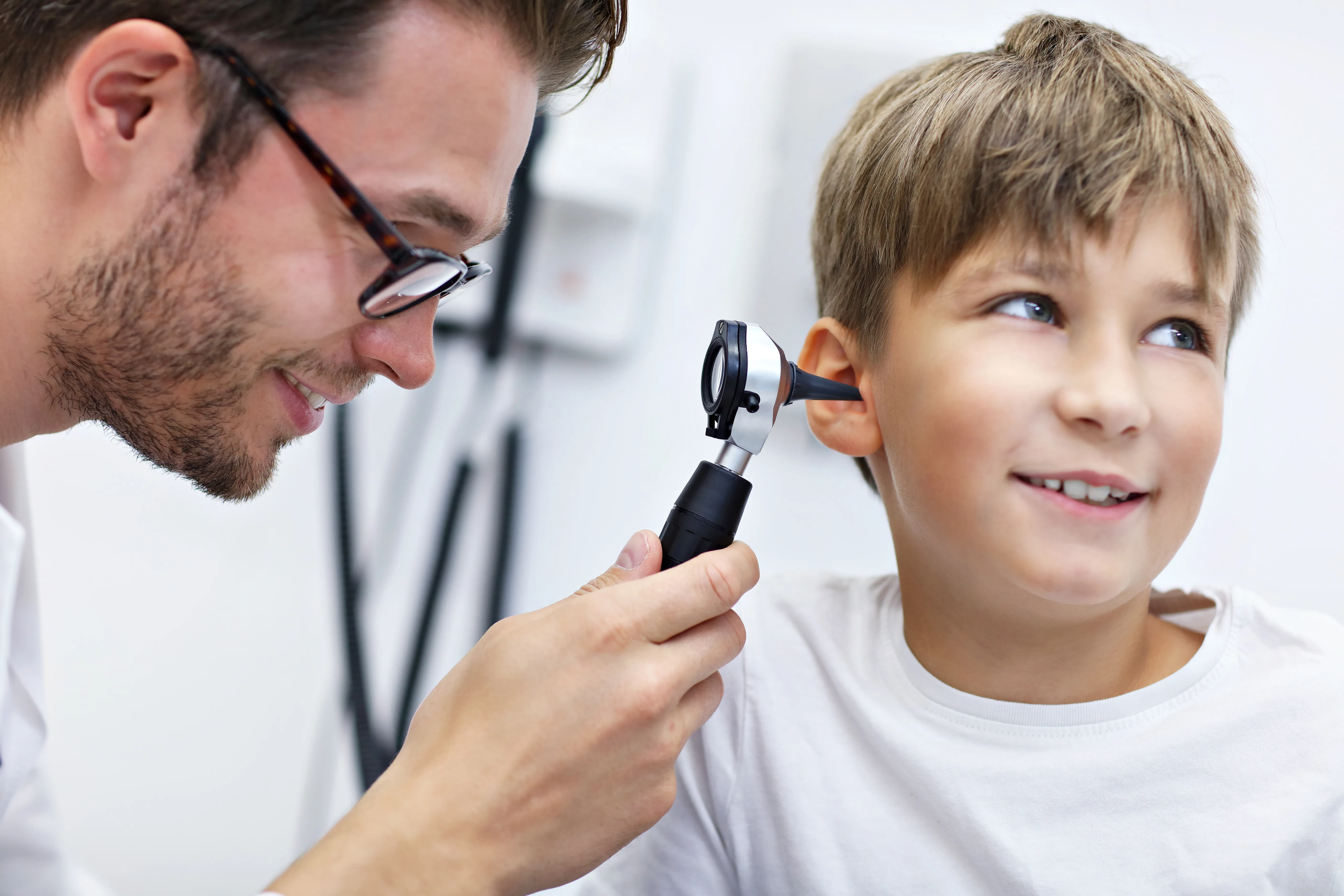
Hearing loss is a profound clinical challenge, directly impacting an individual’s ability to communicate, engage socially, and maintain cognitive health. While acoustic amplification devices, commonly known as hearing aids, provide significant benefits for mild to severe hearing deficits, there exists a threshold where amplification alone is insufficient. When sensorineural hearing loss reaches a severe-to-profound degree, the delicate structures of the inner ear—specifically the cochlear hair cells—are often too damaged to transduce sound waves into neural signals effectively. This is the clinical juncture where cochlear implants transform auditory rehabilitation.
At Joy of Hearing, our audiology and speech pathology teams routinely evaluate patients who struggle to understand speech even with appropriately fitted, high-powered hearing aids. For these patients, a cochlear implant offers a sophisticated, surgically implanted technological solution. Unlike hearing aids that make sounds louder, cochlear implants bypass the damaged portions of the ear and directly stimulate the auditory nerve.
The Anatomy and Pathophysiology of Severe Sensorineural Hearing Loss
To understand the mechanism of a cochlear implant, it helps to review the normal auditory pathway in detail. Sound waves enter the outer ear and strike the tympanic membrane, causing it to vibrate. These vibrations travel through the ossicular chain (malleus, incus, and stapes) of the middle ear into the fluid-filled cochlea via the oval window. Inside the cochlea, the organ of Corti houses thousands of microscopic sensory hair cells. These hair cells detect the fluid movement and translate mechanical energy into electrical impulses, which the auditory nerve carries to the brainstem and eventually the auditory cortex.
In cases of severe-to-profound sensorineural hearing loss, these inner and outer hair cells are absent, severely depleted, or functionally impaired. This irreversible damage can result from genetic mutations, ototoxic medications (such as certain aminoglycoside antibiotics or chemotherapeutic agents), severe viral infections like cytomegalovirus or meningitis, head trauma, or advanced presbycusis (age-related hearing loss). Because the sensory hair cells cannot generate the necessary electrical impulses, the auditory nerve receives degraded input or no input at all. In this scenario, simply amplifying sound through a hearing aid is comparable to turning up the volume on a broken speaker—the sound may be louder, but it remains distorted, muffled, and entirely unintelligible.
Components of a Cochlear Implant System
A cochlear implant system circumvents this damaged sensory mechanism entirely. It does not rely on the mechanical movement of the inner ear structures. Instead, the system consists of two primary, highly advanced components: an external sound processor and an internal surgically placed implant.
The External Sound Processor
The external component is typically worn behind the ear or on the head, held in place by a strong magnet. It contains several micro-technology elements:
- Microphones: These capture acoustic sound waves from the environment. Modern processors feature dual directional microphones to focus on speech in noisy settings, significantly improving the signal-to-noise ratio.
- Speech Processor: This sophisticated microcomputer analyzes and digitizes the captured sound in real-time. It filters out background noise and prioritizes the acoustic features necessary for speech comprehension, such as formant frequencies and speech envelopes.
- Transmitter Coil: The digitized signal is sent to the transmitter coil, which transmits the coded signals and power via radio frequencies across the intact skin to the internal device.
The Internal Implant
The internal component is surgically placed beneath the skin behind the ear. It consists of:
- Receiver/Stimulator: This unit receives the transmitted signals and converts them into precise electrical impulses. It is embedded in a small depression created in the mastoid bone by the surgeon.
- Electrode Array: A slender, highly flexible silicone wire bundle is threaded directly into the scala tympani of the cochlea. This array contains multiple platinum or iridium electrode contacts designed to stimulate different frequency regions of the auditory nerve—high frequencies at the basal turn of the cochlea, and low frequencies toward the apical turn.
How the Brain Learns to Hear Again
When the electrode array stimulates the auditory nerve, the nerve sends these electrical signals to the auditory cortex of the brain. The brain perceives these impulses as sound.
However, the electrical signal delivered by a cochlear implant does not sound exactly like normal acoustic hearing. Early recipients often describe the sound as mechanical, robotic, or resembling a poorly tuned radio. This occurs because the brain is receiving auditory input in a completely new format, mapped across a limited number of electrodes compared to the thousands of natural hair cells.
Through consistent auditory therapy and brain plasticity—the central nervous system’s remarkable ability to reorganize neural pathways—the auditory cortex gradually adapts to this new electrical stimulation. Over a period of months, the robotic quality fades. Speech sounds natural, and many recipients learn to appreciate music, distinguish subtle phonetic differences, and converse effortlessly on the telephone.
Candidacy: Who Benefits from a Cochlear Implant?
Determining candidacy for a cochlear implant involves a comprehensive, multidisciplinary evaluation. Not everyone with hearing loss is a suitable candidate. The criteria differ for adults and pediatric patients, reflecting the different neurodevelopmental needs of these populations.
Adult Candidacy
For adults, clinical guidelines generally require:
- Moderate-to-profound sensorineural hearing loss in both ears.
- Limited benefit from appropriately fitted hearing aids. This is typically defined by poor performance on standardized sentence recognition tests in a controlled clinical environment. For example, a candidate might score less than 50% on sentence recognition in the ear to be implanted, and less than 60% in the contralateral ear or binaurally.
- No medical contraindications to general anesthesia or middle ear surgery.
- A strong desire to communicate effectively and realistic expectations regarding the outcomes and the intensive rehabilitation process required post-activation.
Pediatric Candidacy
Early intervention is vital for children born with profound hearing loss. Because the critical period for speech and language development occurs in the first few years of life, timely implantation provides the best opportunity for a child to develop spoken language commensurate with their hearing peers.
- Children as young as 9 to 12 months can be implanted. In specific medical cases, such as post-meningitis ossification where the cochlea threatens to turn to bone, implantation may occur even earlier to ensure the electrode array can be fully inserted.
- The child must demonstrate profound sensorineural hearing loss bilaterally.
- There must be a documented lack of progress in auditory skill development despite appropriate, intensive hearing aid trials and auditory-verbal therapy.
The Comprehensive Evaluation Process
At Joy of Hearing, our assessment protocol is incredibly thorough, designed to ensure that surgery is the appropriate next step. A patient undergoing consideration for an implant will participate in several specialized evaluations:
- Audiological Evaluation: This includes pure-tone audiometry, speech reception thresholds, and rigorous speech discrimination testing with and without hearing aids in sound-treated booths. We assess real-world listening capabilities using background noise.
- Medical and Surgical Consultation: An otolaryngologist specializing in neurotology reviews the patient’s medical history and examines the external and middle ear anatomy to rule out active infections.
- Radiological Imaging: High-resolution Computed Tomography (CT) scans and Magnetic Resonance Imaging (MRI) of the temporal bones are conducted. These scans allow the surgeon to evaluate the patency of the cochlea, assess the physical integrity of the auditory nerve, and identify any anatomical anomalies like enlarged vestibular aqueducts.
- Speech and Language Assessment: For pediatric patients, speech-language pathologists evaluate current communication skills, receptive language, and expressive language to establish a baseline for post-surgical therapy.
- Psychological and Social Evaluation: We assess the patient’s readiness, family support structure, and motivation, ensuring they have the resources needed to comply with follow-up appointments.
The Surgical Procedure
Cochlear implant surgery is a routine outpatient procedure performed under general anesthesia, typically lasting two to three hours. The surgeon makes a small incision behind the ear, performs a mastoidectomy to safely access the middle ear space without disturbing the facial nerve, and creates a tiny opening (cochleostomy) or uses the natural round window to gently insert the electrode array into the cochlea.
Following insertion, the receiver/stimulator is secured against the skull, and the incision is closed with dissolving stitches. The patient generally returns home the same day. Recovery is usually mild, with some temporary discomfort, localized swelling, or mild dizziness. The internal device remains entirely inactive during the healing phase, which lasts two to four weeks.
Activation and Mapping: The True Beginning
The surgical placement of the device is only the physical foundation. The clinical journey truly begins at the activation appointment, often referred to as the “switch-on.”
During activation, an audiologist connects the external processor to a computer interface. The audiologist systematically tests each electrode along the array, measuring the patient’s physiological and behavioral responses to electrical stimulation. The primary goal is to establish threshold levels (the softest electrical current the patient can detect) and comfort levels (the maximum current that is loud but comfortable). This highly individualized programming process is known as “mapping.”
Initial mappings are inherently conservative to prevent overstimulation. Over subsequent weeks and months, as the patient’s auditory nerve adapts to the electrical current, the audiologist will progressively adjust the map to provide a wider dynamic range of sound, refining pitch perception and loudness growth.
Real-World Clinical Observations
Consider a clinical example of a patient who lost his hearing progressively over two decades. At his initial activation, he reported that his wife’s voice sounded like a mechanical synthesizer. However, by attending regular mapping sessions and diligently performing structured auditory exercises at home, his central nervous system adapted. Six months post-activation, he could understand his wife clearly from another room and returned to participating in crowded professional meetings without relying on lip-reading or closed captioning.
Auditory Rehabilitation: Training the Brain to Listen
A successful cochlear implant outcome relies heavily on structured auditory rehabilitation. Surgery provides the physical access to sound; rehabilitation teaches the brain how to interpret that sound meaningfully.
Speech-language pathologists and audiologists collaborate to design targeted therapy programs. For adults, therapy involves aural rehabilitation exercises like identifying environmental sounds, discriminating between phonetically similar words (such as “cat” and “hat”), and tracking continuous conversations in the presence of competing background noise.
For children, auditory-verbal therapy is paramount. Clinicians guide parents in creating an enriched auditory environment, ensuring the child learns to listen and speak naturally. Therapy focuses on developing auditory memory, sequencing, and the complex grammatical structures required for fluent communication.
Realistic Expectations and Ongoing Care
While cochlear implants offer remarkable outcomes, success varies among individuals. Factors influencing performance include the duration of profound hearing loss prior to implantation, the anatomical status of the cochlear nerve, the cause of the hearing loss, and the patient’s dedication to rehabilitation. A patient who has been deaf for thirty years before receiving an implant will generally face a longer and more challenging rehabilitation process compared to someone who lost their hearing abruptly just six months ago.
Patients must understand that an implant does not cure hearing loss or restore normal organic hearing. It is a sophisticated prosthesis that provides functional auditory perception. Consistent, lifelong follow-up care is required to ensure the external processor is functioning optimally, the internal components are secure, and the mapping accurately reflects the patient’s evolving neural responses.
A Pathway to Reconnection
Living with severe hearing loss often leads to social isolation, fatigue, and a documented decline in cognitive quality of life. Cochlear implants represent one of the most successful neural prostheses in modern medicine, bridging the gap between profound silence and the vibrant world of sound. By directly stimulating the auditory nerve, this technology enables individuals to reconnect with loved ones, advance in their careers, and experience the simple auditory joys of life, from the rustling of leaves to the voices of grandchildren.
The clinical teams at Joy of Hearing are dedicated to guiding patients through every phase of this life-altering medical intervention, from the initial audiometric evaluation to long-term post-surgical rehabilitation. We employ rigorous, evidence-based practices to ensure each patient achieves their maximum communicative potential.
10 Tips for Talking to Someone Who Has a Speech or Language Disorder
The Benefits of Post-Fitting Hearing Aid Counseling for First-Time Users
5 Tips for Getting the Most Out of Your Post-Fitting Hearing Aid Counseling Sessions