
Tailored to Perfection: How Joy of Hearing Customizes Speech Therapy Plans to Meet the Unique Needs of Each Client
Joy of Hearing Team
Joy of Hearing Clinical Team
Human communication represents one of the most intricate cognitive and motor achievements of the human brain. It is the primary vehicle through which we express our fundamental needs, share our complex identities, and connect meaningfully with the world around us. When a speech, language, or swallowing disorder disrupts this natural process, it impacts far more than just the physical act of talking; it deeply affects emotional well-being, social integration, and academic or professional success. Recognizing this profound impact, the clinical field of speech-language pathology has evolved significantly over the past few decades.
Historically, some therapeutic environments relied on highly standardized, uniform approaches, expecting patients to adapt to the therapy rather than the other way around. However, extensive clinical evidence explicitly demonstrates that when it comes to speech therapy, one size absolutely does not fit all. Every single individual possesses a unique neurocognitive profile, varying anatomical structures, distinct linguistic backgrounds, and highly specific personal goals. At Joy of Hearing, our core clinical philosophy is entirely centered around precision and personalization. We understand that highly effective therapy requires an intricate, meticulously customized approach designed to meet the exact, unique needs of each client.
The Neurological Imperative for Customization
The absolute necessity for personalized speech therapy is firmly rooted in the scientific principles of neuroplasticity—the brain’s remarkable, lifelong ability to reorganize itself by forming new neural connections. Neuroplasticity is the precise biological mechanism that allows a young child to acquire new vocabulary, an individual with a stutter to establish fluent speech patterns, or an adult stroke survivor to miraculously regain lost language function.
However, clinical research shows that neuroplasticity is heavily dependent on specific variables, the most critical of which is salience. The human brain is exponentially more likely to rewire itself and permanently retain new skills if the therapeutic activity is meaningful, highly engaging, and directly relevant to the individual’s daily life. A generic, uninspired worksheet or a standardized rote repetition exercise almost always fails to activate the necessary cognitive pathways. By deliberately customizing the therapy plan to incorporate a client’s specific passions, daily routines, and personal motivations, we exponentially increase the salience of the activity. This targeted approach optimizes neurological adaptation and significantly accelerates clinical progress.
The Foundation: Comprehensive Diagnostic Assessment
The formulation of a truly customized therapy plan must always begin with a rigorous, multifaceted diagnostic assessment. At Joy of Hearing, we refuse to rely solely on standardized testing scores. While norm-referenced tests provide essential baseline quantitative data, they often fail completely to capture a client’s actual functional communication abilities in the real, unpredictable world.
Our comprehensive clinical evaluations encompass a incredibly wide array of diagnostic observations. We conduct thorough oral-motor examinations to meticulously assess the strength, coordination, tone, and range of motion of the articulators (the jaw, lips, tongue, and soft palate). We deeply analyze spontaneous language samples to evaluate syntax, semantics, and pragmatics in natural, unscripted conversation.
Furthermore, we heavily utilize dynamic assessment. This specialized process involves directly observing how a client responds to different types of cues, prompts, and teaching styles during the evaluation itself. This critical step allows our licensed speech-language pathologists to determine not just what the client currently cannot do, but exactly how their specific brain learns best.
Setting Functional, Client-Centered Goals
Once the comprehensive diagnostic profile is fully complete, we transition to the critical phase of goal setting. In a truly customized therapy model, goals are never arbitrary, and they are never copied from a manual. They must intentionally bridge the gap between clinical deficits and real-world functional independence.
For example, a purely clinical goal might be to “improve the safe physiological coordination of the pharyngeal swallowing mechanism.” However, the functional, customized goal is explicitly enabling the client to safely and comfortably enjoy their favorite meal at a restaurant with their family without the terrifying fear of aspiration.
In a pediatric context, a standard clinical goal might narrowly focus on “producing the /r/ phoneme accurately in the initial position of words with 80% accuracy.” The customized, functional goal is ensuring the child can clearly and confidently say their own name or successfully participate in classroom discussions without experiencing crushing frustration or peer teasing. By deliberately aligning precise clinical targets with deep personal aspirations, the entire therapy process becomes profoundly meaningful.
Tailoring Modalities and Interventions
Customization thoroughly extends to the specific therapeutic modalities and evidence-based techniques utilized during every single session. Our speech-language pathologists are extensively trained in a diverse array of advanced clinical interventions, allowing us to rapidly pivot and adapt based on the client’s distinct learning style.
Play-Based Pediatric Interventions
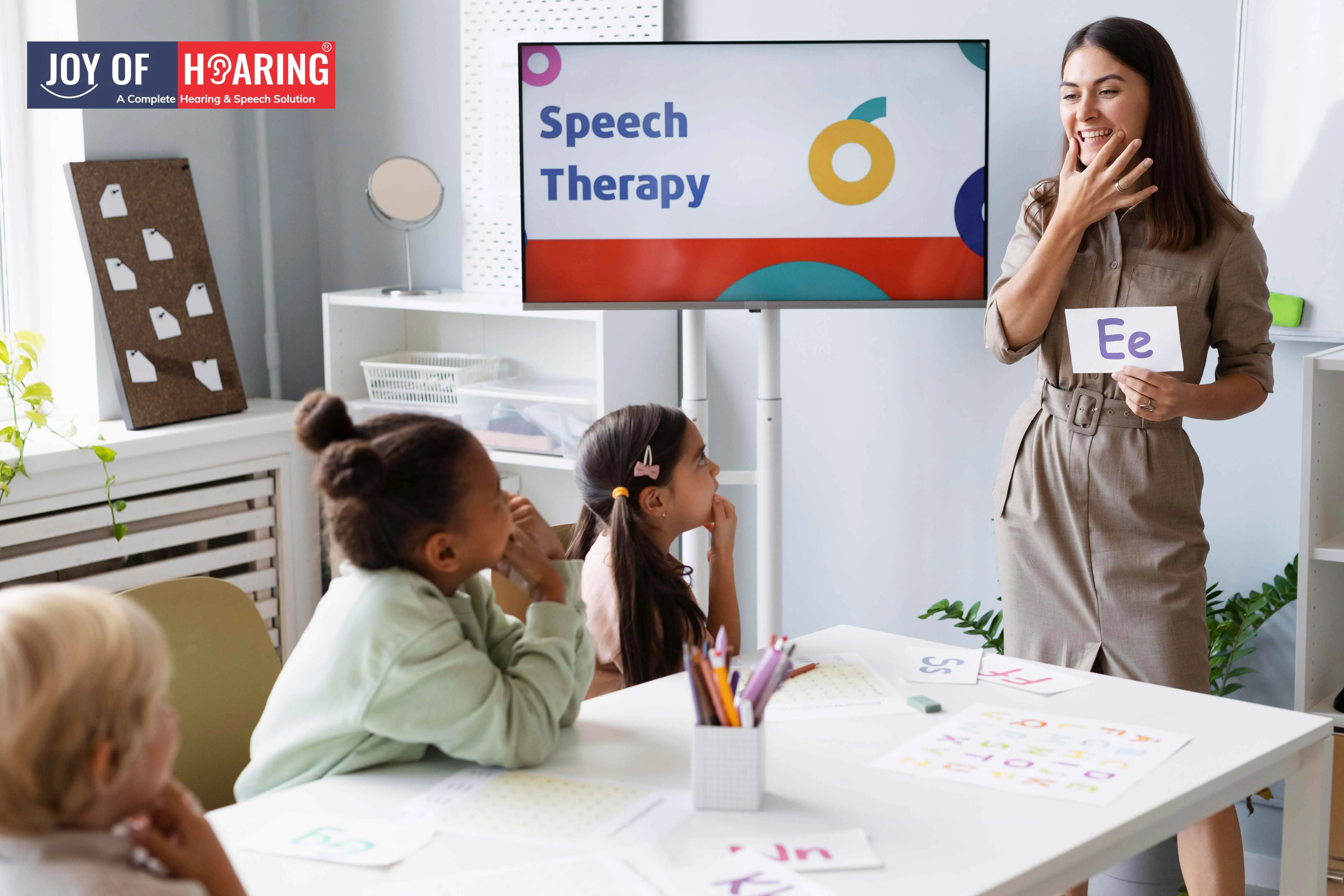
For our younger pediatric clients, play is the absolute natural context for neurological learning. We emphatically do not expect a toddler to sit rigidly at a table and perform highly repetitive, boring drills. Instead, early intervention therapy is heavily play-based and child-led.
If a child has a profound, hyper-focused interest in trains, our clinicians will expertly structure the entire clinical session around that specific interest. We might use wooden train tracks to practice spatial prepositions (placing the train “under” the bridge or “next to” the station), to target specific difficult speech sounds, or to aggressively encourage the expansion of expressive language by vividly narrating a busy train station scene. This customized approach maintains exceptionally high levels of motivation and entirely prevents the common issue of therapeutic burnout in young children.
Adult Rehabilitation: Prioritizing Dignity and Independence
For adults facing severe communication challenges due to traumatic neurological events like stroke, traumatic brain injury (TBI), or neurodegenerative diseases (such as Parkinson’s disease, ALS, or Primary Progressive Aphasia), the therapeutic approach shifts drastically. Adult therapy must fiercely respect the client’s rich lived experience, prioritize their absolute dignity, and acknowledge the deep psychological grief of losing language.
Therapy for adults strictly focuses on the functional communication absolutely necessary for daily independence and safety. This customized approach might deeply involve role-playing highly specific scenarios, like practicing how to clearly order a complicated coffee, rehearsing customized conversational scripts for a return to the workplace, or utilizing specialized cognitive-linguistic exercises to improve memory and executive function for managing personal finances. When working with adult populations, we heavily incorporate their career history, specific hobbies, and personal relationships into the therapy materials to ensure maximum cognitive engagement and respect.
Empowering the Support System
We firmly believe that highly effective speech therapy absolutely does not end when the client walks out of the clinic doors. The most significant, lasting progress always occurs outside the therapy room, in the natural, everyday environment. Therefore, customizing a plan strictly requires the active, educated involvement of the client’s family or primary support network.
Our clinicians dedicate significant, focused time to caregiver education. We actively teach parents, spouses, and home health aides exactly how to facilitate communication effectively in daily life. This might involve demonstrating highly specific language-expansion techniques for a parent to use naturally during bath time, or explicitly teaching a spouse how to use supportive communication strategies (like offering written choices or intentionally allowing an extra ten seconds of processing time) for a partner with severe aphasia. By directly equipping the family with customized, practical strategies, we completely transform the home environment into a continuous, 24/7 therapeutic space.
Culturally and Linguistically Responsive Practice
A truly elite, customized speech therapy plan must actively honor and seamlessly integrate the client’s unique cultural and linguistic background. At Joy of Hearing, we approach diverse patient populations with deep clinical humility and profound respect.
When evaluating and working with bilingual clients or those who speak varying regional dialects, we carefully and scientifically differentiate between a true underlying language disorder and a completely normal language difference. Therapy materials are meticulously selected to accurately reflect the client’s specific cultural context, ensuring that the vocabulary, imagery, and social scenarios presented are culturally highly relevant. We actively support the maintenance and growth of the primary home language while simultaneously targeting clinical goals in English, recognizing that cultural identity, family connection, and language are completely inextricably linked.
Integrating Advanced Clinical Technology
Modern speech therapy benefits immensely from rapid technological advancements, and we integrate these powerful tools selectively based on highly individual clinical needs.
For clients with severe expressive language deficits, we comprehensively customize and implement Augmentative and Alternative Communication (AAC) systems. These range from low-tech, customized picture exchange boards to highly sophisticated, eye-gaze tracking speech-generating computerized devices. The customization of an AAC device is a remarkably meticulous clinical process, requiring the speech-language pathologist to program specific vocabulary that is highly relevant to the individual user’s daily life, personal interests, and medical needs.
Additionally, we frequently utilize advanced biofeedback technology and specialized acoustic software for severe speech sound disorders and complex voice therapy. This provides clients with exact, real-time visual representations of their invisible speech patterns. This technology is incredibly powerful for strong visual learners who benefit immensely from seeing the actual acoustic properties of their voice on a screen, allowing them to make immediate physiological adjustments.
Continuous Evaluation and Adaptation
A customized speech therapy plan is never a static, filed-away document; it is a highly dynamic, constantly living roadmap. As clients clinically progress, their needs rapidly evolve. What worked exceptionally well in the very first month of therapy may become entirely ineffective or boring by month three.
Our clinicians engage in highly detailed, continuous data collection during every single session. We track clinical progress meticulously and conduct regular, formal reassessments. If a client hits a clinical plateau or encounters a sudden new barrier, the therapy plan is immediately, actively modified. We might rapidly adjust the level of verbal prompting, completely change the therapeutic materials, or introduce a brand-new evidence-based intervention. This constant, vigilant calibration ensures that therapy always remains challenging yet highly achievable, preventing deep frustration and maximizing long-term clinical outcomes.
Realizing True Communication Potential
At Joy of Hearing, we absolutely refuse to accept the deeply flawed premise of generalized, bulk healthcare. We intensely recognize that behind every single clinical diagnosis is a profoundly unique individual with highly specific fears, complex hopes, and vital communication needs. By actively investing the significant time, empathy, and advanced clinical expertise required to construct highly personalized speech therapy plans, we do far more than just treat a physical disorder. We empower our clients to reclaim their lives.
Whether it involves patiently helping a young child utter their very first, highly anticipated clear sentence, assisting an older adult in proudly regaining their authoritative voice after a devastating stroke, or providing highly advanced alternative communication methods for individuals with deeply complex physical needs, our clinical commitment remains entirely unwavering. We are fiercely dedicated to providing precise, compassionate, and highly effective care that thoroughly honors the individuality of every single patient who bravely walks through our doors.