
How Hearing Aids Actually Work: A Clinical Breakdown
Joy of Hearing Team
Joy of Hearing Clinical Team
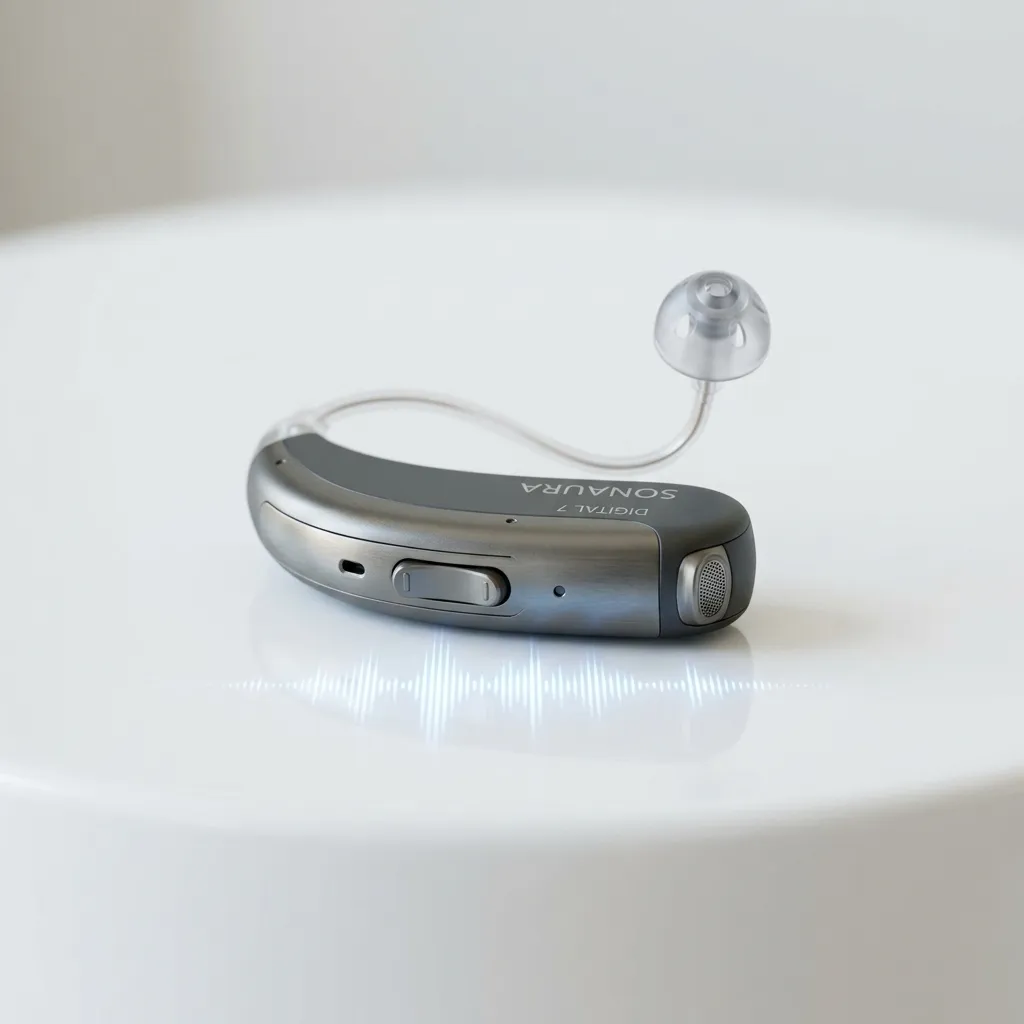
When many people envision hearing aids, they picture the large, whistling, analog devices of previous decades—primitive acoustic tools that indiscriminately amplified every sound in the environment, making background noise unbearable and conversations overwhelming. However, the field of audiology has undergone a radical technological revolution.
Modern hearing aids are no longer simple amplifiers. They are highly sophisticated, medical-grade micro-computers worn on the ear. They process sound millions of times per second, utilizing complex algorithms to isolate human speech, suppress environmental noise, and dynamically adapt to rapidly changing acoustic environments. To truly appreciate the capability of these devices, it is essential to understand the clinical and technological breakdown of exactly how they capture, process, and deliver sound to the human brain.
The Evolution from Amplification to Neural Prosthetics
To understand modern hearing aids, one must shift their perspective from basic volume control to advanced neural processing. Hearing loss is rarely just a uniform decrease in overall volume; it is almost always a distinct loss of specific frequencies, typically high-frequency sounds like the consonants ‘s’, ‘f’, ‘th’, and ‘sh’. These subtle, high-frequency markers carry the clarity, sharpness, and precise meaning of human speech.
When the inner ear loses the physical ability to detect these specific frequencies due to cellular damage, the auditory cortex in the brain is deprived of the signals it needs to comprehend language. A modern hearing aid functions directly as a neural prosthetic—it restores these missing frequencies with pinpoint computational accuracy, delivering a perfectly equalized signal that allows the brain to re-learn how to process speech. This complex task requires an intricate pipeline of acoustic processing.
Step 1: Acoustic Intake and Advanced Microphone Technology
The journey of sound through a hearing aid begins at the microphone. However, unlike the simple microphone on a standard telephone or laptop, medical-grade hearing devices utilize sophisticated dual-microphone arrays designed for dynamic acoustic analysis.
In a quiet environment, the device operates in an “omnidirectional” mode. This means the microphones gather sound equally from all directions (a full 360 degrees), allowing the wearer to hear birds singing, footsteps approaching, and the ambient natural world with perfect clarity.
When the wearer steps into a noisy environment, such as a crowded restaurant or a bustling urban street, the micro-computer detects the overwhelming background noise floor and automatically switches to a “directional” mode. By comparing the microsecond differences in the arrival time of sound waves between the front and rear microphones, the processor can computationally suppress acoustic energy originating from behind and beside the listener. This directional polar pattern focuses a narrow beam of heightened sensitivity strictly on the person speaking directly in front of the patient. This technology remains the absolute cornerstone of understanding human speech in complex, noisy environments.
Step 2: Analog-to-Digital Conversion (ADC)
Once the microphone captures the raw acoustic energy and converts it into a continuous electrical signal, the signal must be translated into a mathematical language the internal computer chip can understand. This specific task is handled by the Analog-to-Digital Converter (ADC).
The ADC samples the continuous electrical wave thousands of times per second, measuring its physical amplitude and frequency, and converts it entirely into binary code. The higher the sampling rate and bit depth of the device, the more accurately the hearing aid can recreate the subtle nuances of music and human speech. High-end modern devices boast sampling rates that rival professional studio recording equipment, ensuring that the sound passing through the device remains pristine, dynamic, and completely devoid of artificial digital distortion.
Step 3: The Digital Signal Processor (DSP) – The Brain of the Device
After the sound is successfully digitized, it enters the Digital Signal Processor (DSP). The DSP acts as the true functional “brain” of the hearing aid, consisting of a microscopic chip executing millions of discrete calculations every single second. It applies several highly advanced clinical algorithms to the digital signal before sending it to the ear.
Wide Dynamic Range Compression (WDRC)
Unlike outdated analog amplifiers that make all sounds equally loud, the modern DSP utilizes non-linear amplification known clinically as Wide Dynamic Range Compression (WDRC). WDRC mimics the natural function of a healthy human cochlea. It applies substantial amplification to very soft, hard-to-hear sounds (like a whisper or a ticking clock), moderate amplification to normal conversational speech, and zero amplification—or even active compression—to painfully loud sounds (like a slamming door, a dropped dish, or an ambulance siren). This ensures that soft speech is always perfectly audible, while loud environments remain entirely comfortable.
Frequency Band Segregation
The DSP splits the incoming sound into numerous distinct frequency channels, functioning much like a highly advanced equalizer on a stereo system. A clinical audiologist meticulously programs these individual channels to match the precise topographical map of the patient’s audiogram. If a patient has profound high-frequency hearing loss but completely normal low-frequency hearing, the DSP will exclusively amplify the high frequencies, leaving the low frequencies natural, open, and completely unaltered.
Spectral Noise Reduction Algorithms
Continuous background noise, such as the low hum of an airplane engine, an air conditioning unit, or road traffic, can cause severe listening fatigue over the course of a day. The DSP uses advanced spectral subtraction algorithms to identify these steady-state noises. Because human speech fluctuates rapidly in amplitude and frequency, while mechanical engine noise remains entirely static, the DSP can mathematically subtract the static noise from the signal, isolating the dynamic speech patterns and delivering a clean, unburdened signal to the wearer.
Active Feedback Cancellation
In the past, hearing aids were notorious for emitting a high-pitched squeal, known as feedback, when the amplified sound leaked out of the ear canal and re-entered the microphone. Modern DSPs utilize active phase-cancellation technology. The exact microsecond the chip detects an impending feedback loop, it generates an identical sound wave but intentionally flips it perfectly out of phase. The two acoustic waves collide and cancel each other out instantly, neutralizing the feedback squeal before it is ever perceived by the human ear.
Step 4: Artificial Intelligence and Deep Neural Networks
The most cutting-edge advancement in modern clinical audiology is the integration of Artificial Intelligence (AI) and Deep Neural Networks (DNN) directly into the DSP architecture. Traditional hearing aids rely on rigid, pre-programmed rules to determine what constitutes speech and what constitutes noise.
In contrast, modern DNNs are trained extensively on millions of real-world soundscapes—from crowded subways to windy golf courses to highly reverberant echoing cathedrals. The AI system learns how to dynamically balance the sound scene organically. Instead of aggressively shutting down background noise and leaving the user feeling entirely isolated from their environment, AI-driven devices prioritize the primary speech signal while maintaining a natural, balanced awareness of the surrounding world. This significantly reduces cognitive load, meaning the wearer’s brain has to work substantially less to decipher conversation.
Step 5: Binaural Processing – Recreating Natural Brain Function
Human beings hear with their brain, not just their ears, and the brain explicitly requires input from both sides of the head to accurately localize sound and filter out background interference. Modern hearing aids communicate seamlessly with one another wirelessly, typically utilizing Near-Field Magnetic Induction (NFMI) or Bluetooth low-energy protocols.
If the left hearing aid detects a loud, disruptive noise source on the left side, it instantly transmits a data packet to the right hearing aid. The two devices work together as a synchronized acoustic network, adjusting their directional microphones in perfect tandem to shield the listener from the noise source while greatly enhancing the speech signal originating from the front. This advanced binaural processing perfectly mimics natural interaural time and level differences, restoring a true, three-dimensional auditory landscape.
Step 6: Delivery via the Receiver
Once the digital signal is thoroughly cleaned, equalized, and perfected by the processor, it is sent to the Digital-to-Analog Converter (DAC) and finally to the Receiver (the miniature speaker component). The receiver translates the electrical pulses back into natural acoustic sound waves, delivering the custom-tailored sound directly to the tympanic membrane (eardrum).
In many highly popular Receiver-In-Canal (RIC) devices, this tiny speaker sits directly inside the physical ear canal, tethered to the main processor located behind the ear by a microscopic, practically invisible wire. This specific placement greatly reduces acoustic distortion and provides an exceptionally clear, natural sound quality.
Real-World Clinical Example: The Restaurant Dilemma
Consider a classic clinical scenario: a patient with age-related hearing loss (presbycusis) attending a family dinner at a loud, highly echoing restaurant. Without hearing aids, the clattering of silverware, the hum of the HVAC system, and the overlapping conversations of adjacent tables merge into a chaotic, indistinguishable wall of sound. The patient strains heavily to hear the person sitting directly across the table, experiencing massive cognitive fatigue and eventually withdrawing from the conversation entirely.
When wearing properly fitted modern devices, the environment transforms entirely. The omnidirectional microphones immediately detect the high noise floor. The binaural network synchronizes, activating the directional microphone arrays to strictly suppress the noise from the tables situated behind them. The DSP’s noise reduction algorithms strip away the low-frequency HVAC hum. The WDRC system amplifies the soft, high-frequency consonants of their grandchild speaking across the table, while instantly clamping down on the sudden, sharp clatter of a dropped plate. The patient engages effortlessly, their brain receiving a completely clean, easily decipherable auditory signal.
The Essential Role of Clinical Verification (Real-Ear Measurement)
Despite all this incredible computational technology, a hearing aid is ultimately a useless piece of hardware if it is not correctly prescribed and clinically programmed by a professional. Every human ear canal has a unique physical volume, shape, and acoustic resonance.
An indispensable step in the clinical fitting process is Real-Ear Measurement (REM). An audiologist places a microscopic probe tube deep into the patient’s ear canal alongside the hearing aid to precisely measure the exact sound pressure level striking the eardrum across all frequencies. This clinical verification scientifically ensures that the highly sophisticated algorithms are actually delivering the precise prescription required by the patient’s audiogram. Purchasing hearing aids off-the-shelf or online without clinical REM verification is clinically equivalent to buying extremely expensive eyeglasses without knowing your visual prescription.
Neuroplasticity: Re-training the Auditory Cortex
Finally, it is vital to understand that successfully adapting to hearing aids involves neuroplasticity. When a patient lives with untreated hearing loss for years, their auditory cortex slowly re-wires itself, forgetting exactly how to process normal, everyday environmental sounds.
When hearing aids suddenly restore these missing frequencies, the brain is initially overwhelmed. The hum of a refrigerator, the rustle of a daily newspaper, or the ticking of a clock can seem jarringly loud. Over a period of several weeks, guided by expert clinical counseling, the brain re-adapts. It re-learns how to filter out harmless background noise organically and focus intensely on the speech signals provided by the devices.
Modern hearing technology is nothing short of miraculous, flawlessly blending acoustic physics, computer science, and neurobiology to restore essential human connection.