
Hearing Protection for Musicians: Why It's Important and How to Protect Your Hearing
Joy of Hearing Team
Joy of Hearing Clinical Team
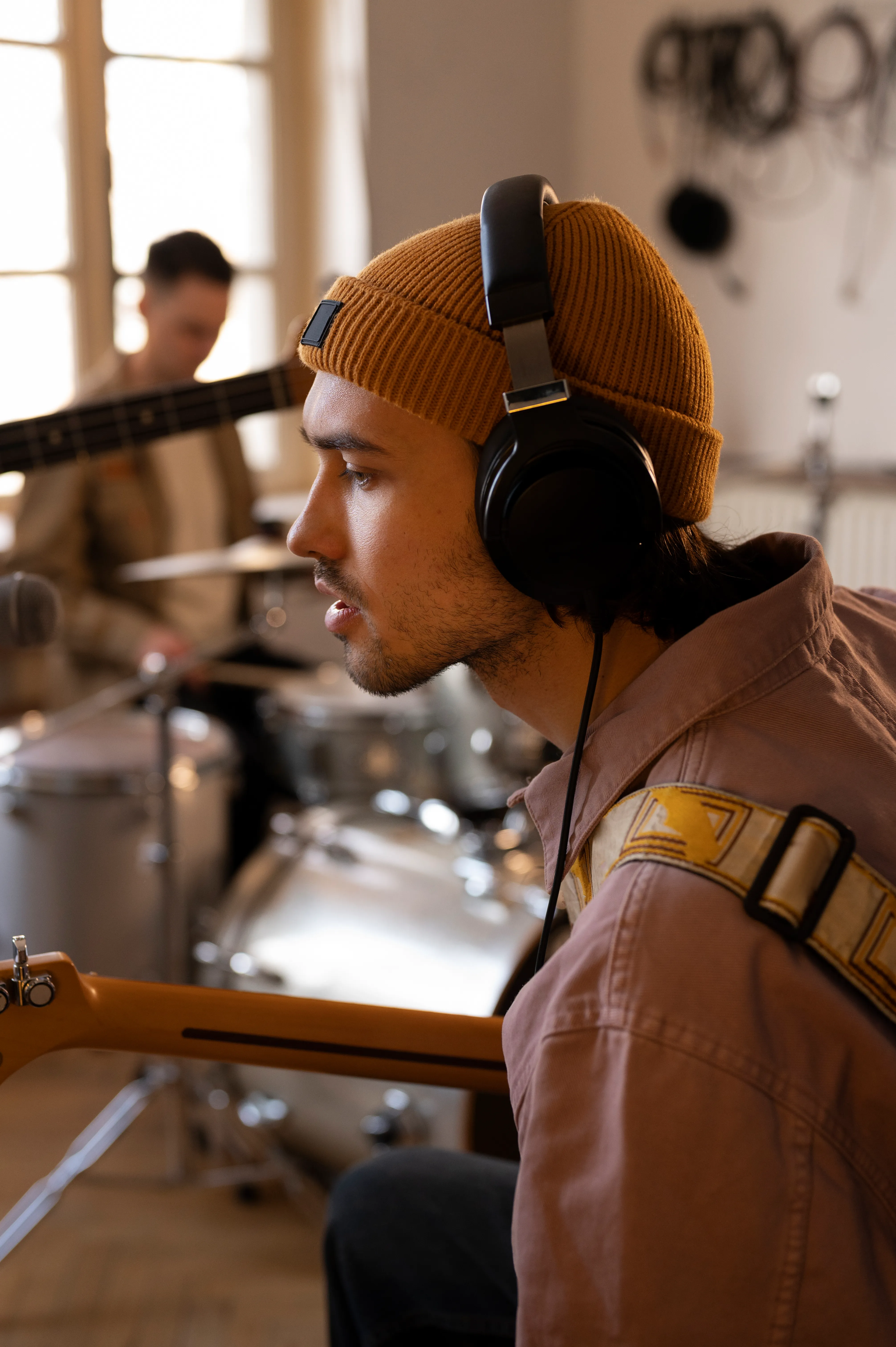
For a musician, the auditory system is not just a sensory mechanism; it is the primary instrument upon which their entire livelihood and artistic identity rely. Regardless of the genre—be it classical symphonies, jazz ensembles, or high-decibel rock performances—musicians are consistently exposed to sound pressure levels that significantly exceed occupational safety limits. Over time, this chronic exposure to loud volumes during rehearsals, live performances, and recording sessions inflicts cumulative, often irreversible damage on the delicate structures of the inner ear.
Despite the evident clinical risks, a pervasive reluctance remains within the musical community regarding the adoption of hearing protection. Many fear that wearing earplugs will distort their perception of pitch, alter the natural timbre of their instrument, or isolate them from the ensemble. However, modern audiological advancements have developed clinical solutions that preserve fidelity while mitigating harm. Protecting your hearing health is an absolute professional necessity.
The Pathophysiology of Noise-Induced Hearing Loss
To understand why protective measures are essential, we must examine exactly how acoustic trauma damages the ear. The human ear is a highly specialized organ designed to convert acoustic energy (sound waves) into mechanical energy, and eventually into electrical impulses that the brain can interpret.
Inside the cochlea—a snail-shaped structure in the inner ear—sit thousands of microscopic sensory cells known as hair cells, or stereocilia. These delicate cells are organized anatomically by frequency, much like the keys on a piano. High-frequency sounds are processed at the base of the cochlea, while low-frequency sounds are processed at the apex.
When exposed to excessive sound pressure levels, the fluid inside the cochlea moves violently. This excessive mechanical force overworks the stereocilia. Initially, the hair cells experience metabolic exhaustion, leading to what audiologists call a Temporary Threshold Shift (TTS). You may notice this as a muffled sensation or a ringing in the ears after a loud concert. Given adequate rest, the cells can recover.
However, repeated exposure prevents this recovery phase. The overworked hair cells produce reactive oxygen species (free radicals) that trigger permanent cellular death. Because human inner-ear hair cells do not regenerate, this results in a Permanent Threshold Shift (PTS)—permanent, sensorineural hearing loss.
The Unique Vulnerability of Musicians
Musicians face unique audiological hazards depending on their chosen instrument, placement within an ensemble, and acoustic environments.
- Classical Musicians and Asymmetric Loss: Violinists and violists frequently develop profound asymmetrical hearing loss in their left ear. Because the instrument rests directly on the left shoulder, the left ear is positioned mere inches from the sound source, absorbing the brunt of the high-frequency acoustic energy over decades of intense practice.
- Percussionists and Drummers: A standard drum kit easily produces peak sound pressure levels exceeding 120 decibels (dB). Cymbals and snare drums deliver sharp, percussive acoustic trauma that is particularly devastating to the high-frequency regions of the cochlea.
- Brass and Woodwind Players: Trumpets and trombones can project sound at dangerous decibel levels, not only endangering the players themselves but also the musicians seated directly in front of them in a cramped orchestra pit.
- Vocalists and Front-of-House Musicians: Singers standing directly in front of stage monitors or massive amplification arrays absorb immense amounts of acoustic energy throughout a typical touring performance.
Beyond standard hearing loss, acoustic trauma frequently triggers secondary auditory disorders that are exceptionally distressing for performing artists.
Tinnitus: A persistent ringing, buzzing, or hissing sound in the ears without an external acoustic source. For a musician, the constant presence of intrusive neuro-electrical noise can severely impair their ability to hear subtle musical nuances, concentrate during rehearsals, and achieve restorative sleep.
Hyperacusis: An increased, often painful sensitivity to ordinary environmental sounds. A musician suffering from hyperacusis may find the sound of a snare drum or high trumpet notes physically intolerable, severely restricting their ability to perform or even socialize.
Diplacusis: A terrifying clinical condition for any musician, diplacusis involves a disparity in pitch perception between the right and left ears. When an individual hears a single, specific note but perceives it as two different pitches simultaneously, it becomes nearly impossible to play or sing accurately in tune.
The Psychological Impact of Hearing Loss in Musicians
The psychological toll of untreated hearing loss in the musical community cannot be understated. For an artist, the inability to perceive subtle harmonic changes, dynamic variations, and complex rhythms often results in severe performance anxiety and a profound loss of self-identity. Many professionals who experience the onset of noise-induced hearing loss report intense feelings of isolation, frustration, and depression as their physical connection to their art slowly deteriorates.
In ensemble settings, the inability to hear subtle visual or auditory cues from a conductor, or to match intonation with fellow players, can lead to professional disputes and career-ending miscommunications. Empathetic clinical intervention focuses not only on the physical preservation of the auditory nerve but also on sustaining the psychological well-being of the artist.
Real-World Clinical Example: The Symphony Violinist
Consider a recent patient at our clinical practice: a 45-year-old professional violinist who presented with progressive difficulty hearing the director’s instructions during orchestra rehearsals. She also reported a subtle, high-pitched ringing isolated entirely to her left ear.
Comprehensive audiometric testing revealed a classic “noise notch”—a sharp drop in hearing acuity specific to the 4,000 to 6,000 Hertz (Hz) frequency range—exclusively in the left ear. This asymmetrical loss directly correlated with decades of holding her instrument directly beneath her left jaw. Because she had avoided wearing standard earplugs out of fear of losing her ability to hear upper harmonics, she had sustained permanent micro-trauma to her cochlea.
By intervening clinically and fitting her with custom-molded musician’s earplugs featuring a 9 dB acoustic filter, we successfully halted the progression of the damage while fully preserving the acoustic fidelity she required to execute complex concertos.
Advanced Hearing Protection Strategies
The primary reason musicians reject hearing protection is the use of incorrect, over-the-counter tools. Standard foam earplugs, commonly found in pharmacies or industrial hardware stores, are designed strictly for occupational safety. They provide bulk attenuation by indiscriminately blocking high frequencies while allowing low frequencies to pass through. The result is a muffled, unnatural, and distorted sound profile that makes professional musical performance nearly impossible.
Clinical audiology offers highly specialized solutions designed specifically for the rigorous acoustic demands of the music industry.
Custom-Molded Musician Earplugs
Custom musician earplugs represent the absolute gold standard in hearing preservation. The process begins in our clinic with a careful otoscopic examination of the ear canal to ensure it is clear of cerumen (earwax). An audiologist then places a specialized protective foam block deep into the ear canal, safely resting near the eardrum, and injects a medical-grade silicone impression material.
Once the silicone cures, the exact anatomical impression is extracted and sent to an audiological laboratory. A custom earpiece is manufactured to perfectly match the unique contours of the patient’s ear canal. This precise fit ensures that no sound leaks around the edges of the plug, providing maximum physical comfort and acoustic security for long rehearsals.
Flat-Attenuation Acoustic Filters
The true brilliance of custom musician earplugs lies in the interchangeable acoustic filters embedded directly within the silicone mold. Unlike solid foam plugs, these specialized filters provide “flat attenuation.” They reduce the volume of the sound uniformly across all frequencies—low, mid, and high.
The result is that the music sounds exactly the same, retaining all its clarity, brilliance, and natural timbre, but at a mathematically safer, lower volume. Filters are typically prescribed in three specific levels of reduction:
- ER-9 (9 dB reduction): Ideal for vocalists, acoustic guitarists, and string players who need minimal volume attenuation but still require essential protection from sustained acoustic exposure.
- ER-15 (15 dB reduction): The most popular clinical choice, offering a perfectly balanced level of protection suitable for most band directors, electric guitarists, and bassists.
- ER-25 (25 dB reduction): Designed for environments with extreme sound pressure levels, making them an absolute necessity for drummers and heavily amplified rock musicians.
In-Ear Monitors (IEMs): A Clinical Perspective
For touring musicians and vocalists, In-Ear Monitors (IEMs) have radically revolutionized stage performances. IEMs are custom-fitted earpieces containing highly advanced miniature speakers (armature drivers) that deliver a direct, personalized audio mix straight into the ear canal.
By utilizing a tight custom seal, IEMs passively isolate the musician from the chaotic, high-decibel stage noise and the booming sound of floor wedge monitors. This severe isolation allows the musician to hear themselves and their bandmates with pristine studio clarity at a significantly lower, safer volume.
However, IEMs act as a double-edged sword. Because they are capable of producing immense volume directly at the tympanic membrane, a musician who carelessly turns up their IEM receiver can inadvertently cause catastrophic hearing damage in a matter of minutes. Proper clinical guidance on safe listening levels and the implementation of hard volume limiters within the monitoring system are absolutely essential when using IEMs on stage.
Routine Audiological Monitoring
Protecting your hearing is an ongoing physiological commitment. Musicians should never wait until they experience a noticeable hearing deficit to seek clinical intervention. Routine audiological assessments act as an essential early warning system.
Standard hearing tests only measure frequencies up to 8,000 Hz. However, noise-induced hearing loss almost always begins in the ultra-high frequencies. Comprehensive clinical evaluations for professional musicians must include High-Frequency Audiometry, measuring thresholds up to 16,000 Hz.
Additionally, Otoacoustic Emissions (OAE) testing can successfully detect subclinical damage to the outer hair cells before a permanent threshold shift ever registers on a standard behavioral hearing test. By catching cellular stress early, an audiologist can aggressively adjust a musician’s protection strategy before irreversible damage occurs.
Preserving Your Artistic Instrument
The human ear is a miraculous, irreplaceable organ. For a performing artist, safeguarding this delicate biological instrument is just as critical as maintaining their guitar, violin, or voice. Ignoring the physical realities of sound pressure will inevitably lead to a shortened career and a dramatically diminished quality of life. Modern clinical audiology ensures that protecting your hearing no longer requires sacrificing the joy, nuance, and brilliance of the music you dedicate your life to creating.
Do not wait for the ringing to become permanent. Take proactive, clinical steps to preserve your most valuable asset.