
Understanding the Impact of Hearing Loss on Mental Health
Joy of Hearing Team
Joy of Hearing Clinical Team
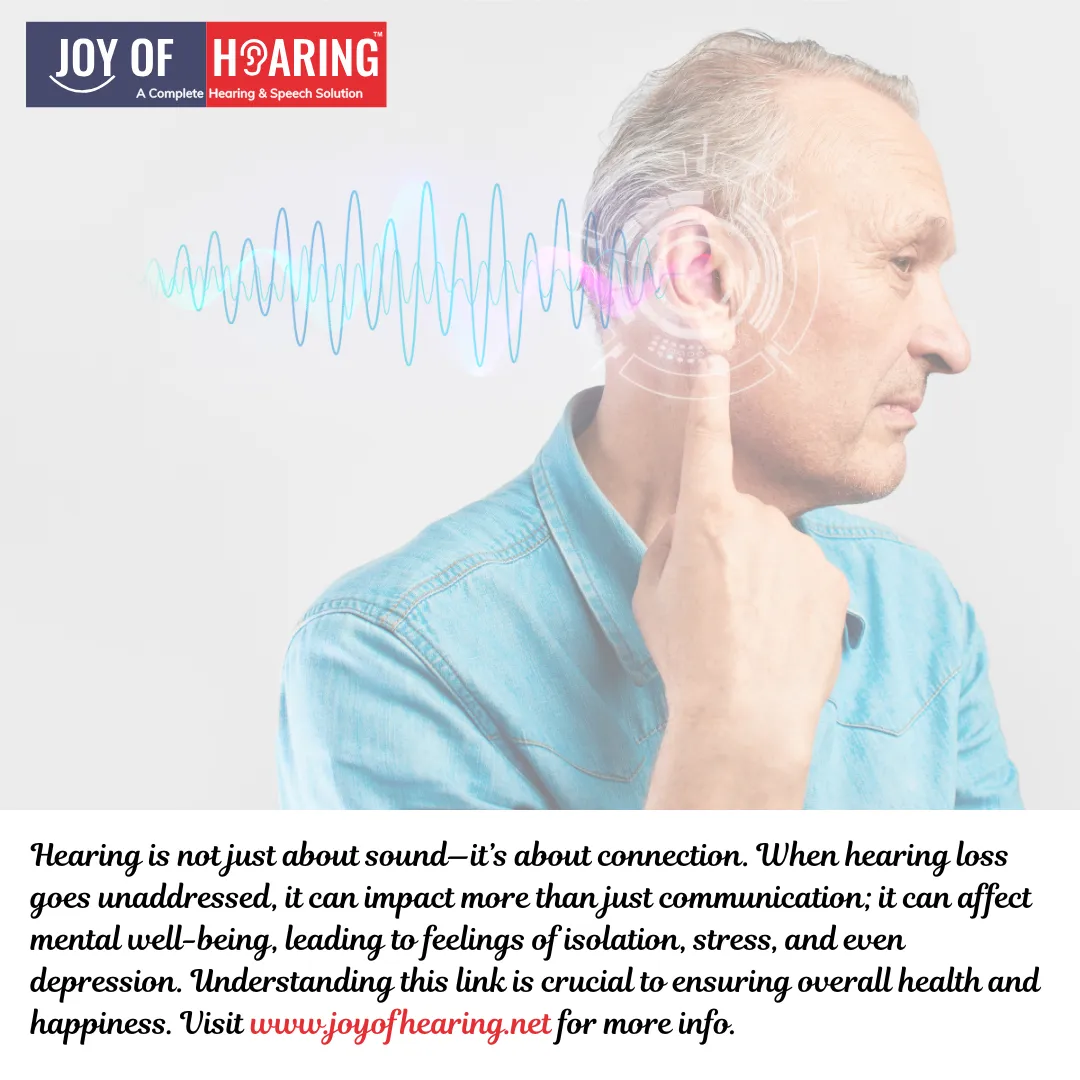
The physiological mechanisms of human hearing encompass far more than the simple mechanical transmission of sound waves through the outer, middle, and inner ear. Audition is a deeply integrated, highly complex neurological process that heavily influences cognitive function, emotional regulation, and overall psychological well-being. Historically, the broader medical community viewed sensorineural hearing loss primarily as an isolated structural deficit of the inner ear—a mere mechanical failure of the cochlea. However, contemporary audiological and psychiatric research unequivocally demonstrates that unaddressed auditory decline triggers a complex, systemic cascade of severe psychological and cognitive consequences.
Understanding the intricate relationship between hearing loss and mental health is paramount for proactive, comprehensive patient care. When the auditory system fails to deliver complete, high-fidelity acoustic signals to the brain, the repercussions extend significantly beyond mere communication difficulties. It fundamentally alters the ways individuals interact with their environment, process emotional stimuli, maintain relationships, and safeguard their long-term neurological health.
The Neurobiology of Auditory Deprivation
To accurately comprehend the psychological impact of hearing loss, we must examine the brain’s neurobiological response to sensory deprivation. The central auditory cortex, located deep within the temporal lobe, relies on a constant, uninterrupted stream of acoustic input to maintain its structural and functional integrity. When a patient develops sensorineural hearing loss—typically characterized by the irreversible degradation of stereocilia (hair cells) in the cochlea—the auditory nerve sends incomplete, fragmented, or degraded neural signals to the brain.
In response to this drastically reduced sensory stimulation, the brain undergoes a profound structural process known as cross-modal cortical reorganization. Without adequate sound input, the specific areas of the brain dedicated to processing audition begin to atrophy from disuse. Concurrently, adjacent sensory regions (such as those responsible for vision or tactile sensation) may begin to recruit and hijack these unused neural pathways.
This neurological restructuring requires immense cognitive effort, forcing the prefrontal cortex—the area responsible for working memory, problem-solving, and executive function—to compensate continuously for the degraded sound signals. The brain is forced to “guess” missing phonemes by analyzing visual cues and linguistic context. This constant, subconscious neural overexertion forms the baseline for the profound psychological fatigue that patients experience daily, leaving fewer cognitive resources available for emotional regulation and stress management.
Social Withdrawal and the Isolation Cascade
The most immediate, visible psychological symptom of auditory decline is the insidious progression of social withdrawal. For an individual with a healthy auditory system, engaging in dialogue in a moderately noisy environment is an automatic, largely subconscious process. The brain easily separates the target speech signal from background noise.
Conversely, for an individual with compromised hearing, every single conversation demands intense, deliberate, and exhausting focus. This phenomenon, clinically known as “listening effort,” exacts a heavy metabolic toll on the central nervous system. Attempting to decipher fragmented sentences by filling in missing high-frequency consonants (like ‘s’, ‘th’, ‘f’) creates severe cognitive fatigue. Over time, the neurological energy required to participate in social gatherings, family dinners, or public events vastly outweighs the emotional enjoyment derived from them.
Consequently, patients instinctively begin to isolate themselves as a behavioral protective mechanism against this exhaustion. They may frequently decline invitations, avoid crowded spaces with poor acoustics, and retreat from long-standing relationships. This isolation cascade is deeply detrimental. Human beings are inherently social creatures; the severance of social ties directly correlates with an exponentially increased risk of clinical depression. The lack of interaction fosters feelings of loneliness, marginalization, and a profound sense of disconnection from the immediate world.
The Stress Response System and Chronic Anxiety
Living with unmanaged hearing loss frequently subjects the patient to a perpetual state of chronic, low-grade anxiety. Our auditory system serves as our primary environmental warning mechanism, operating 360 degrees around us, even while we sleep. It continuously monitors the environment for threats or alerts. When hearing diminishes, this subconscious security system is compromised. The patient becomes hypersensitive to the unpredictability of their surroundings, never entirely sure if they are missing critical environmental cues.
Furthermore, communication-based anxiety becomes a dominant emotional state. The constant fear of misunderstanding questions, responding inappropriately in professional settings, or missing vital information during medical appointments triggers the body’s sympathetic nervous system (the “fight or flight” response). This chronic psychological stress elevates cortisol levels, leading to sleep disturbances, systemic inflammation, and an ongoing feeling of hypervigilance. The anxiety of “bluffing” through conversations—pretending to understand when one does not, merely to avoid embarrassment—creates a pervasive internal tension that heavily degrades the patient’s emotional quality of life.
Tinnitus: The Psychological Burden of Phantom Sound
Any comprehensive discussion regarding the mental health impacts of audiological conditions must include a thorough analysis of tinnitus. Frequently occurring alongside sensorineural hearing loss, tinnitus is the perception of sound—often ringing, buzzing, roaring, or hissing—in the complete absence of an external acoustic stimulus.
While tinnitus originates as an anomaly within the auditory system, its primary negative impacts manifest almost entirely psychologically. For many patients, the constant, unrelenting intrusion of phantom sound disrupts concentration, impedes relaxation, and severely fractures sleep architecture. The complete inability to escape the noise can induce profound emotional distress, leading to a vicious cycle where anxiety exacerbates the subjective perception of the tinnitus, which in turn fuels further psychological anxiety. Specialized audiological interventions, including sophisticated acoustic masking therapy and cognitive behavioral techniques, are often required to manage the severe psychological distress associated with chronic tinnitus.
The Direct Link to Cognitive Decline and Dementia
Perhaps the most alarming intersection of hearing loss and neurology is the well-documented, undeniable link to cognitive decline. Extensive longitudinal studies, including landmark research cited extensively by the Lancet Commission, have definitively identified mid-life hearing loss as the single largest modifiable risk factor for developing dementia and Alzheimer’s disease later in life.
The exact mechanisms driving this connection are multifaceted and deeply intertwined with the factors discussed above. First, the cognitive load theory posits that the brain exhausts its resources attempting to decode degraded auditory signals, leaving significantly less neural capacity for memory consolidation and executive functioning. Second, the brain atrophy hypothesis suggests that chronic auditory deprivation accelerates structural volume loss in the temporal lobe, a region intrinsically linked to memory processing and language comprehension. Finally, the severe social isolation prompted by hearing loss strips the brain of the complex, dynamic stimuli provided by human interaction, rapidly hastening cognitive deterioration. Addressing auditory deficits early is not merely a matter of improving hearing; it is a critical neuroprotective strategy designed to preserve the brain’s structural integrity.
Recognizing the Psychological Symptoms in Loved Ones
Identifying the psychological manifestations of hearing loss is essential for providing appropriate support and encouraging intervention. Family members, caregivers, and primary care physicians should monitor for the following specific behavioral indicators:
- Increased Irritability During Conversations: Frustration is a common, understandable response to the continuous strain of communication. Patients may exhibit abnormally short tempers, defensiveness, or agitation when asked to listen to something they cannot easily decipher.
- The “Nod and Smile” Defense Mechanism: As listening fatigue sets in, patients will often abandon the effort to understand entirely, passively nodding, smiling, or agreeing to statements they did not actually hear. This is a coping mechanism designed to avoid the social embarrassment of repeatedly asking for clarification.
- Telephone Avoidance: The telephone removes critical visual cues and lip-reading capabilities, relying entirely on auditory signals. Individuals with hearing loss often develop a distinct aversion to phone calls, viewing them as highly stressful and overly demanding.
- Uncharacteristic Apathy Towards Hobbies: A sudden, unexplained lack of interest in previously enjoyed activities—particularly those involving group dynamics, theater, music, or public speaking—frequently signals an underlying auditory struggle rather than a sudden, spontaneous shift in personality.
Clinical Intervention and Aural Neuro-Rehabilitation
The clinical approach to treating hearing loss must address both the physical sensory deficit and the resulting psychological fallout. Aural rehabilitation is a comprehensive, multidisciplinary process. It begins with precise diagnostics utilizing pure-tone audiometry, speech discrimination testing, and tympanometry to map the specific deficits of the patient’s auditory system.
Modern acoustic prosthetics (hearing aids) represent the primary first line of intervention. Today’s advanced audiological devices utilize sophisticated algorithms, directional microphones, and artificial intelligence to isolate human speech and violently suppress background noise, effectively reducing the cognitive load placed on the patient’s brain. However, simply acquiring devices is only the beginning of the journey.
The brain requires a significant acclimatization period to adjust to the reintroduction of sound. Audiologists provide critical counseling and structured auditory training during this critical phase, guiding the patient through the neuroplastic changes necessary to correctly interpret the restored acoustic signals. By treating the patient holistically, clinicians can successfully mitigate the anxiety, reverse the social withdrawal, and restore the communicative bonds that sustain robust mental well-being.
Ignoring auditory decline guarantees the progression of its psychological symptoms. Prioritizing hearing health is a vital, non-negotiable component of holistic medical care, ensuring emotional stability, cognitive preservation, and a high quality of life.