
The Sound of Childhood: Why Early Hearing Care Matters
Joy of Hearing Team
Joy of Hearing Clinical Team
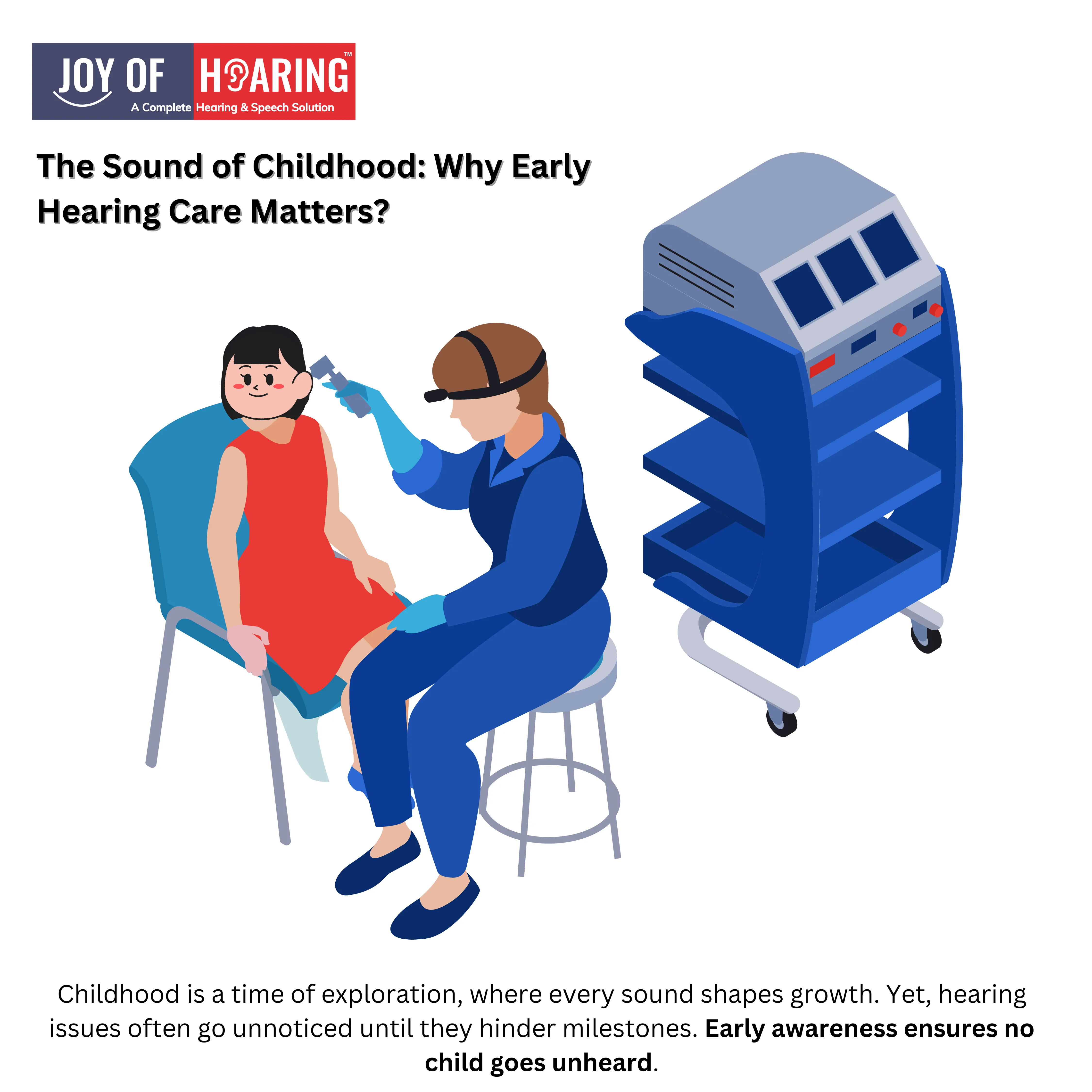
The early stages of life represent a window of rapid neurodevelopment, where sensory input fundamentally shapes the architecture of the developing brain. Among the primary senses, audition—or hearing—plays an indispensable role in cognitive, linguistic, and psychosocial maturation. A child’s ability to process acoustic stimuli dictates their capacity for speech acquisition, language comprehension, and social integration. Unfortunately, auditory deficits in pediatric populations frequently go undetected until secondary symptoms, such as speech delays or behavioral challenges, become overtly apparent. Recognizing the intricate mechanics of auditory development and prioritizing early clinical intervention ensures that every child receives the sensory foundation necessary for optimal growth.
The Neurobiology of Early Auditory Processing
To appreciate the urgency of pediatric hearing care, it is necessary to understand the concept of neuroplasticity—the brain’s inherent ability to reorganize itself by forming new neural connections. The auditory pathways and the auditory cortex undergo their most significant maturation between birth and three years of age. During this critical period, the brain requires consistent, high-quality acoustic stimulation to develop the complex neural networks responsible for decoding sound.
If a child experiences auditory deprivation—whether partial or complete—during this critical window, the auditory cortex may be repurposed for other sensory modalities, such as vision. This phenomenon, known as cross-modal plasticity, makes subsequent auditory rehabilitation significantly more challenging. Even mild or unilateral hearing loss can disrupt the precise timing and processing of auditory signals, leading to downstream effects on phonetic recognition, vocabulary acquisition, and syntax formation.
Etiologies of Pediatric Hearing Loss
Hearing impairment in children is generally categorized as either congenital (present at birth) or acquired (developing postnatally). Understanding the etiology is essential for determining the appropriate clinical management pathway.
Congenital Factors
Congenital hearing loss affects approximately 1 to 3 per 1,000 live births, making it one of the most common congenital anomalies.
- Genetic Mutations: Over 50% of congenital hearing loss cases are hereditary, primarily inherited in an autosomal recessive pattern. Mutations in the GJB2 gene, which encodes the Connexin 26 protein, are a leading cause of non-syndromic sensorineural hearing loss. This protein is essential for maintaining potassium homeostasis in the inner ear, a process required for translating sound waves into electrical signals.
- Prenatal Infections (TORCH Complex): Maternal infections transmitted in utero can severely damage the developing auditory system of the fetus. Cytomegalovirus (CMV) is a primary infectious cause of pediatric sensorineural hearing loss. Other pathogens include Toxoplasmosis, Rubella, and Herpes Simplex.
- Structural Anomalies: Malformations of the external ear (such as Microtia or Atresia) or inner ear anomalies (like Mondini dysplasia) can cause mechanical or sensorineural disruption to sound transmission.
- Perinatal Complications: Prematurity, low birth weight, severe neonatal jaundice (hyperbilirubinemia), and hypoxia during delivery are significant risk factors for auditory neuropathy spectrum disorder (ANSD) and inner ear damage.
Acquired Causes
Hearing loss can also develop during childhood due to illness, trauma, or environmental exposure.
- Otitis Media with Effusion (OME): This is the most prevalent cause of transient, conductive hearing loss in early childhood. It involves the accumulation of fluid in the middle ear space without acute infection. While often temporary, chronic OME can cause a persistent mild-to-moderate hearing deficit, effectively muffling sounds during critical periods of speech development.
- Infectious Diseases: Postnatal infections such as bacterial meningitis, measles, and mumps can cause permanent, bilateral sensorineural hearing loss. Meningitis, in particular, can lead to labyrinthitis ossificans—a condition where the inner ear structures ossify, necessitating urgent clinical intervention.
- Ototoxic Medications: Certain pharmacological agents used to treat severe infections or malignancies—such as aminoglycoside antibiotics (e.g., gentamicin) or platinum-based chemotherapies—can inflict irreversible damage on the hair cells within the cochlea.
- Noise-Induced Hearing Loss (NIHL): Increasingly, older children and adolescents are presenting with NIHL due to prolonged exposure to high-volume personal audio devices. This typically manifests as a high-frequency sensorineural deficit.
Clinical Manifestations: Recognizing the Subtle Signs
Early detection relies heavily on the vigilance of parents, caregivers, and primary care physicians. Symptoms of hearing impairment vary significantly across developmental stages.
Infancy (0 to 12 months):
- Absence of the Moro (startle) reflex in response to sudden, loud environmental noises.
- Failure to awaken to loud sounds or turn the head toward a sound source by six months of age.
- Lack of vocalization or cessation of early babbling around six to eight months.
- No apparent recognition of the primary caregiver’s voice when out of the visual field.
Toddlerhood (1 to 3 years):
- Significant delays in expressive language (e.g., failure to formulate single words by 15 months or two-word phrases by 24 months).
- Inconsistent responses to verbal commands, often mistaken for intentional non-compliance or stubbornness.
- Heavy reliance on visual cues, lip-reading, or gestures to comprehend instructions.
- Disproportionate frustration or emotional dysregulation resulting from an inability to express needs.
Preschool and School-Age (4 years and older):
- Frequent requests for repetition.
- Habitually increasing the volume on televisions or electronic devices.
- Articulation errors that persist beyond typical developmental norms, particularly with high-frequency consonant sounds (s, f, th, sh).
- Academic struggles, specific to reading readiness and phonological awareness.
- Social withdrawal or exhaustion after school, known as listening fatigue, due to the immense cognitive load required to process degraded auditory information in noisy classroom environments.
The Cascade Effect: Misdiagnoses and Psychosocial Impact
When a pediatric hearing loss remains undiagnosed, the behavioral manifestations frequently mimic other neurodevelopmental and psychiatric conditions. Children with auditory processing deficits or mild hearing loss are frequently misdiagnosed with Attention Deficit Hyperactivity Disorder (ADHD) or Autism Spectrum Disorder (ASD). An inability to follow multi-step directions in a noisy classroom is interpreted as an attention deficit, while social isolation and lack of eye contact (resulting from an inability to localize sound) are misconstrued as signs of ASD.
This diagnostic overshadowing delays appropriate audiologic intervention, compounding the child’s academic and social difficulties. A comprehensive audiologic evaluation should be a mandatory prerequisite before any behavioral or cognitive diagnosis is finalized.
Diagnostic Modalities in Pediatric Audiology
Modern audiologic science provides precise, objective tools to assess auditory function across all pediatric age groups, from premature neonates to adolescents.
- Otoacoustic Emissions (OAEs): A rapid, non-invasive screening tool used primarily in newborns. A tiny probe placed in the ear canal emits a sound and measures the physiological “echo” produced by healthy outer hair cells in the cochlea. An absent response indicates potential outer or middle ear pathology.
- Auditory Brainstem Response (ABR): This electrophysiological test measures the neural activity generated by the auditory nerve and brainstem in response to acoustic stimuli. Surface electrodes are placed on the infant’s head while sounds are presented through earphones. It provides a highly accurate threshold of hearing sensitivity without requiring active participation from the child.
- Visual Reinforcement Audiometry (VRA): Utilized for infants between six months and two years of age. The child is conditioned to turn their head toward a sound source, reinforced by an illuminated, moving toy. This behavioral assessment provides ear-specific hearing thresholds.
- Conditioned Play Audiometry (CPA): Designed for toddlers and preschoolers (ages two to five). The child is taught to perform a specific task—such as placing a block in a bucket—each time they hear a tone.
- Tympanometry: An objective measure of middle ear function. It assesses the mobility of the tympanic membrane (eardrum) and the status of the middle ear space, highly effective in identifying conditions like Otitis Media with Effusion.
Clinical Management and Intervention Strategies
Following a definitive diagnosis, a multidisciplinary approach involving pediatric audiologists, otolaryngologists (ENTs), and speech-language pathologists is essential. The objective is to provide auditory access as early as possible to capitalize on neuroplasticity.
Amplification and Surgical Solutions
Hearing Aids: For children with sensorineural or permanent conductive hearing loss, behind-the-ear (BTE) hearing aids are the standard of care. BTE devices are durable and allow for the frequent replacement of custom earmolds as the child grows. Modern pediatric hearing aids feature advanced signal processing and FM system compatibility, enhancing the speech signal in reverberant classroom settings.
Cochlear Implants: When a child presents with severe to profound sensorineural hearing loss and derives insufficient benefit from traditional acoustic amplification, a cochlear implant may be indicated. This surgically implanted device bypasses damaged cochlear hair cells, directly stimulating the auditory nerve via electrical impulses. Early implantation (often before the age of one) correlates strongly with speech and language outcomes equivalent to normal-hearing peers.
Bone-Anchored Hearing Systems (BAHA): For children with congenital structural anomalies (e.g., aural atresia) or chronic conductive loss, bone-conduction devices transmit sound vibrations directly through the skull to the functioning inner ear, bypassing the malformed or obstructed outer and middle ear.
Tympanostomy Tubes: For chronic otitis media with effusion that fails to resolve with medical management, the surgical insertion of tympanostomy tubes provides middle ear ventilation, immediately restoring conductive hearing pathways.
Auditory-Verbal Therapy (AVT)
Technology alone is insufficient. The brain must be taught to interpret the novel auditory signals provided by hearing aids or cochlear implants. Auditory-Verbal Therapy is an intensive, specialized intervention focused on teaching children with hearing loss to listen and communicate using spoken language, rather than relying on visual cues. AVT requires active parental participation, empowering caregivers to integrate listening and spoken language strategies into daily routines.
A Clinical Vignette: The Impact of Timely Intervention
Consider the case of a two-year-old child referred to our clinic presenting with severe expressive speech delays and frequent tantrums. The parents reported that the child was unresponsive to verbal discipline and seemed easily distracted. Previous pediatric consultations suspected a behavioral disorder.
Comprehensive audiologic testing, including VRA and Tympanometry, revealed a bilateral moderate sensorineural hearing loss. The child had essentially been missing 50% of the speech spectrum, leading to immense frustration and an inability to acquire language. Within weeks of fitting bilateral pediatric hearing aids and initiating Auditory-Verbal Therapy, the behavioral issues subsided dramatically. The child began mimicking environmental sounds and, within six months, had developed a vocabulary of over fifty words. This outcome underscores the transformative power of accurate, early audiologic intervention.
Advocacy and Parental Empowerment
Proactive engagement in a child’s hearing health is paramount. While many regions have implemented Universal Newborn Hearing Screening (UNHS) programs, parents must remain vigilant. Hearing status is not static; progressive or late-onset hearing loss can manifest months or years after a passed newborn screening. Caregivers should consistently monitor developmental milestones and advocate for comprehensive audiologic evaluations if any concerns arise. Pediatricians must similarly avoid a “wait and see” approach when parents express apprehension regarding their child’s auditory responsiveness.
Providing early and appropriate auditory access alters the developmental trajectory of a child’s life. It ensures they have the foundational tools necessary to engage deeply with their environment, achieve academic success, and build robust social connections. No child should endure the silent isolation of an undiagnosed hearing impairment.