
Protect Your Hearing: Everyday Habits That Matter
Joy of Hearing Team
Joy of Hearing Clinical Team
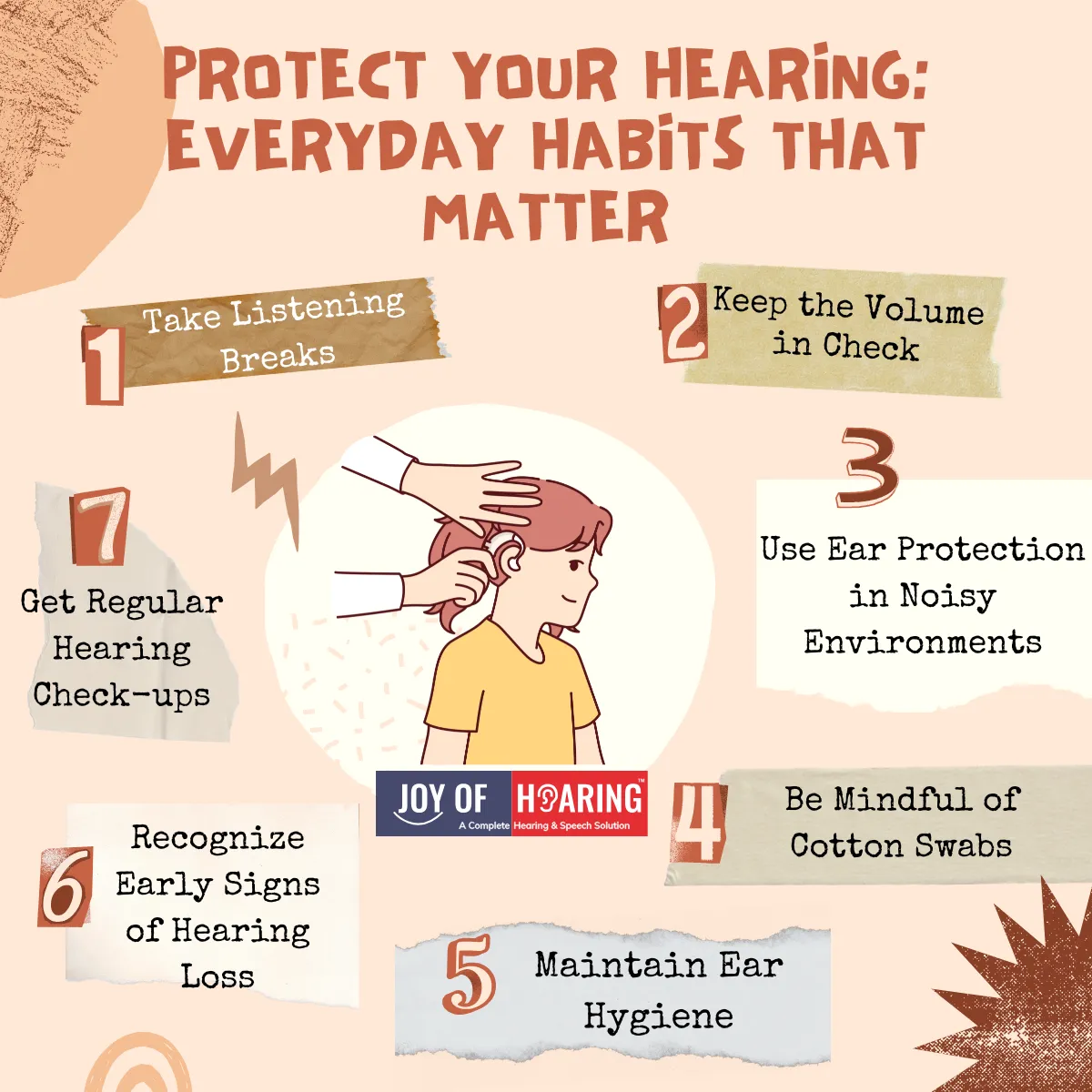
The human auditory system is constantly operating, capturing an immense array of environmental sounds from the moment we wake to the time we fall asleep. While the ability to process sound is essential for communication, spatial awareness, and environmental safety, modern living heavily exposes our ears to unnatural, sustained acoustic stress. The degradation of hearing function is rarely the result of a single, catastrophic event; rather, it typically stems from the cumulative micro-traumas sustained over decades of poor auditory habits. Maintaining long-term ear health requires viewing hearing protection not as a reactive measure to be taken only after symptoms appear, but as an essential, proactive lifestyle modification. Implementing small, biologically sound adjustments to daily routines can dramatically preserve the structural integrity of the inner ear.
The Physiology of Acoustic Load
To understand why everyday habits profoundly matter, one must grasp the delicate biological mechanics at play. Deep within the temporal bone lies the cochlea, a fluid-filled, snail-shaped organ responsible for translating mechanical sound waves into the electrical signals our brain interprets as audio. The cochlea relies on thousands of highly specialized sensory hair cells, known as stereocilia.
Every sound you encounter forces these microscopic hair cells to bend and shear. A quiet conversation causes a gentle, easily managed displacement. However, high-volume inputs force these structures into aggressive, stressful mechanical exertion. Because the human body lacks the biological mechanism to regenerate dead or severely damaged stereocilia, the total lifetime “dose” of loud sound you absorb directly dictates the longevity of your hearing acuity. Managing this daily acoustic load is the foundational principle of lifelong hearing preservation.
Understanding Decibels and Safe Exposure Limits
Sound intensity is clinically measured in decibels (dB), utilizing a strict logarithmic scale. This mathematical reality means that a 10 dB increase does not mean the sound is ten percent louder; it means the acoustic energy has grown tenfold.
The universally recognized threshold for safe, prolonged sound exposure is 85 dB. Continuous exposure to sound levels at or above this threshold significantly increases the likelihood of permanent sensorineural hearing loss. To put this into perspective:
- Normal conversation: 60 dB (Safe indefinitely)
- City traffic from inside a car: 70 dB (Safe indefinitely)
- Household blenders and loud hair dryers: 85–90 dB (Damage occurs after prolonged use)
- Power tools and lawnmowers: 95–105 dB (Damage occurs rapidly)
- Live music concerts and sirens: 110–120 dB (Damage occurs in minutes)
The risk to the inner ear is calculated by evaluating both the intensity of the noise and the exact duration of the exposure. As the decibel level rises, the safe exposure time rapidly plummets. While you can safely endure 85 dB for an eight-hour workday, a jump to 88 dB cuts your safe exposure time in half, down to just four hours. By the time a sound reaches 100 dB, cellular damage begins in a mere 15 minutes.
Personal Audio Devices: The 60/60 Rule
One of the most prevalent threats to auditory health today is the improper use of personal audio devices. Earbuds present a unique physiological risk because the speakers are placed millimeters away from the tympanic membrane (eardrum). This close proximity significantly amplifies the acoustic pressure delivered directly into the ear canal.
When users listen to music, podcasts, or videos on busy trains or loud streets, the natural instinct is to increase the device volume to overpower the environmental background noise. This frequently pushes the sound output well past dangerous 90 dB or 100 dB thresholds without the listener realizing the severity of the acoustic output.
To combat this, audiologists heavily advocate for the strict implementation of the 60/60 rule. This medical guideline recommends keeping the device volume at or below 60% of its maximum capacity and limiting active listening to no more than 60 consecutive minutes. After an hour of stimulation, the user should remove the devices to provide the stereocilia with a mandatory rest period.
The Clinical Benefit of Active Noise Cancellation
For individuals who frequently commute or work in loud environments, upgrading to headphones equipped with Active Noise Cancellation (ANC) is a profoundly beneficial health investment. Unlike standard earbuds that merely block the physical canal, ANC technology utilizes external microphones to sample ambient noise and simultaneously generates an inverse sound wave to electronically neutralize the background sound. By eliminating the low-frequency rumble of a train or airplane cabin, ANC allows the user to listen to their audio clearly at a drastically reduced, perfectly safe volume level.
Ear Hygiene and the Dangers of DIY Intervention
A major component of daily ear health revolves around the proper management of cerumen, commonly known as earwax. Despite societal misconceptions, earwax is not dirt, nor is it an indication of poor hygiene. Cerumen is a highly complex, biologically necessary secretion produced by specialized glands in the outer third of the ear canal. It serves critical physiological functions: lubricating the delicate skin of the canal, trapping foreign particulates like dust and debris, and providing an acidic, antimicrobial barrier that actively prevents bacterial and fungal infections.
The human ear canal is entirely self-cleaning. The skin cells inside the canal naturally migrate outward in a slow conveyor-belt motion, carrying older cerumen toward the outer ear where it naturally falls away or washes off during showering.
The introduction of cotton swabs, bobby pins, or specialized scraping tools into the ear canal actively disrupts this natural biological process. Using a cotton swab routinely pushes the bulk of the cerumen deep into the bony inner portion of the canal, tightly packing it against the highly sensitive tympanic membrane.
Clinical Example: Cerumen Impaction
Patients frequently present to the audiology clinic complaining of sudden-onset hearing loss, a heavy sensation of fullness, or distracting tinnitus. In many cases, an otoscopic examination reveals a dense, hardened wall of impacted cerumen resting directly against the eardrum, entirely caused by years of daily cotton swab usage. Additionally, the abrasive cotton severely strips away the protective moisture barrier of the canal skin, leaving the patient highly susceptible to otitis externa (swimmer’s ear) and painful micro-abrasions.
If an individual experiences an overproduction of wax that causes a physical blockage or noticeably muffles their hearing, they should exclusively seek professional intervention. Audiologists and otolaryngologists utilize safe, medically approved techniques—such as microscopic visualization paired with gentle micro-suction or controlled warm-water irrigation—to clear the blockage safely without jeopardizing the eardrum.
Implementing Auditory Rest Periods
The concept of an “auditory diet” is highly effective for maintaining the cellular integrity of the inner ear. Just as muscles require rest after intense physical exertion, the auditory system requires strict metabolic recovery periods following heavy acoustic loads.
During periods of high noise exposure, the inner ear hair cells consume enormous amounts of cellular energy and generate reactive oxygen species (ROS), which cause oxidative stress. By intentionally stepping away from a noisy environment—such as walking outside during a loud concert or eating lunch in a quiet room rather than a busy cafeteria—you drastically lower the metabolic demand on the cochlea. Providing the ear with 15 minutes of quiet rest for every hour of high-decibel exposure allows the cells to process the metabolic waste and fully recover their structural rigidity, actively preventing temporary threshold shifts from becoming permanent hearing damage.
The Value of Situational Protection
Cultivating a habit of carrying accessible hearing protection ensures that you are never caught defenseless against hazardous acoustic environments.
For routine activities like operating lawn equipment or using power tools, heavy-duty over-ear muffs or highly rated foam earplugs provide excellent, broad-spectrum attenuation. However, for recreational activities where sound quality is important—such as attending live musical performances, theaters, or noisy sporting events—high-fidelity acoustic earplugs are the medically preferred choice. These specialized devices utilize precisely engineered acoustic filters to uniformly reduce the volume across all frequency bands. Instead of muffling the sound, they accurately preserve the full dynamic range and clarity of the environment, simply delivering it to the eardrum at a biologically safe volume.
The Importance of the Baseline Audiogram
A highly neglected habit in routine healthcare is proactive audiological screening. Most individuals thoroughly understand the necessity of annual dental cleanings and routine vision exams, yet they completely ignore their auditory health until they actively struggle to hear conversations.
Waiting for obvious, symptomatic hearing loss to manifest is fundamentally waiting too long. Because noise-induced cellular damage typically begins in the extreme high frequencies (4,000 to 6,000 Hz) well before it affects the primary speech frequencies, early deterioration is entirely invisible to the patient.
Establishing a comprehensive baseline audiogram in early adulthood or middle age allows an audiologist to thoroughly document the precise sensitivity of your cochlear pathways. If future annual exams reveal microscopic shifts in your high-frequency thresholds, targeted behavioral changes and protective strategies can be aggressively implemented to arrest the progression of the damage immediately.
Prioritizing your auditory health through disciplined daily habits ensures that your inner ear retains the sensitivity required to process the full spectrum of environmental sounds. Small, consistent behavioral modifications today will significantly protect your ability to successfully communicate and engage with the world for decades to come.