
The Impact of Noise Pollution on Hearing Health
Joy of Hearing Team
Joy of Hearing Clinical Team
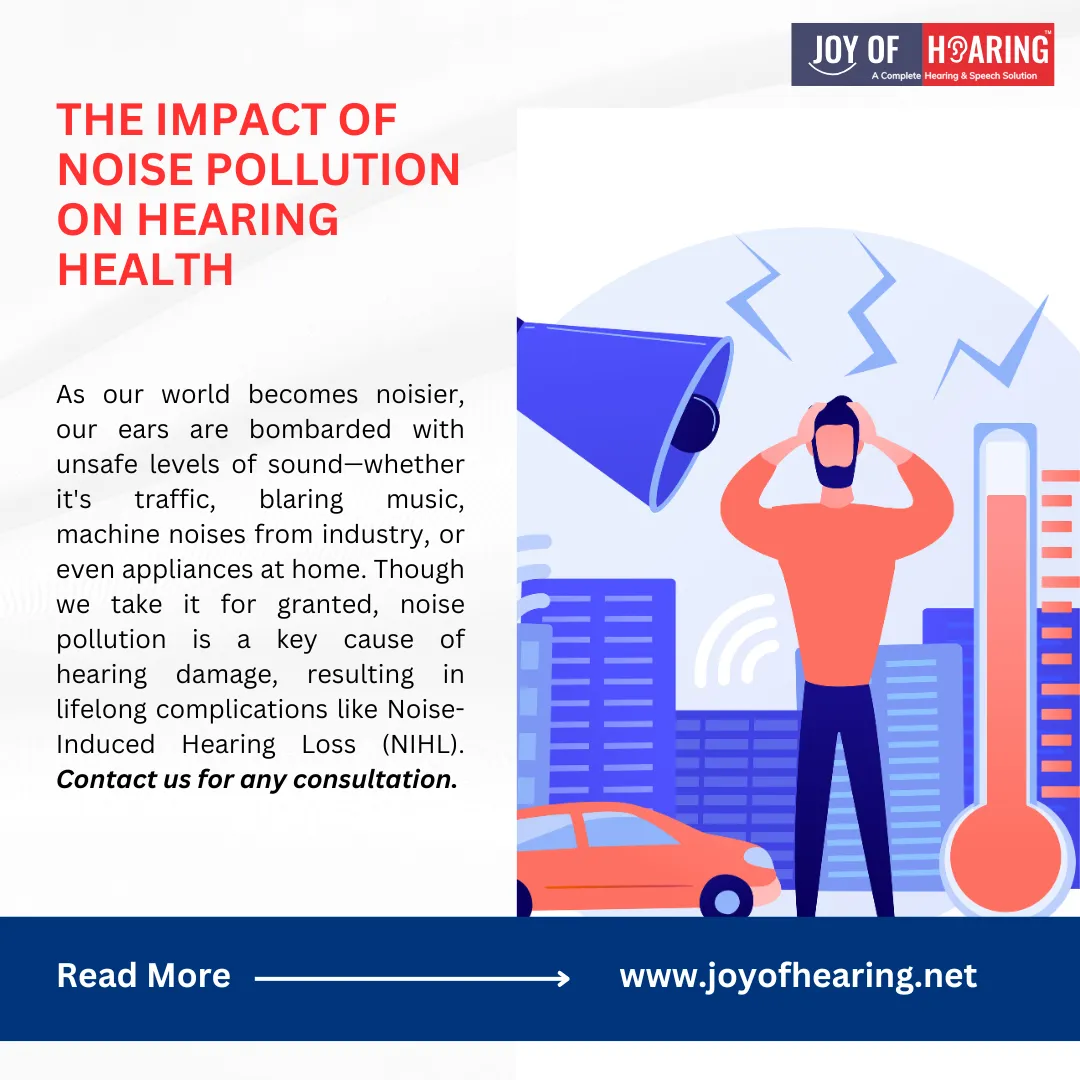
Environmental sound is an inescapable component of modern living. From the constant, low-frequency hum of city traffic and the high-decibel output of heavy construction machinery to the intense acoustics of indoor entertainment venues, background noise is pervasive. However, what society often normalizes as mere background sound is, in strictly clinical terms, an insidious public health hazard. Noise pollution exacts a severe toll on the human auditory system, causing progressive, irreversible damage that frequently escapes notice until significant impairment has already occurred. Understanding the precise physiological impact of excessive acoustic energy is the first step in mitigating its long-term effects on hearing health and systemic well-being.
The Physics of Sound and Auditory Physiology
To comprehend how noise damages hearing, one must first understand both the physical properties of sound and the delicate mechanical and neurological processes within the inner ear. Sound is characterized by two primary dimensions: frequency (pitch), measured in Hertz (Hz), and amplitude (loudness), measured in decibels (dB). The decibel scale is logarithmic, meaning an increase of just 10 dB represents a tenfold increase in sound intensity. A conversation sits at roughly 60 dB, while a rock concert can easily exceed 110 dB.
When sound waves enter the ear canal, they strike the tympanic membrane (eardrum), sending mechanical vibrations through the ossicular chain—the malleus, incus, and stapes—located in the middle ear. These tiny bones amplify the acoustic energy and transmit it into the fluid-filled cochlea.
The cochlea houses the organ of Corti, an intricate, highly specialized structure containing tens of thousands of microscopic sensory hair cells, known as stereocilia. These hair cells function as biological transducers, converting mechanical fluid displacement into electrical action potentials that the auditory nerve carries directly to the brain.
When the auditory system is subjected to excessive sound pressure levels (SPL), these delicate hair cells endure extreme mechanical stress. The intense vibrations force the stereocilia to bend excessively, completely disrupting their highly organized molecular architecture. Over time, or following a single acute acoustic trauma such as proximity to a sudden explosion, these structures sustain catastrophic structural tearing. Unlike cellular structures in the skin or the gastrointestinal tract, the sensory hair cells in the human inner ear absolutely do not regenerate. Once destroyed, their loss is permanent, resulting in irreversible sensorineural hearing loss.
Metabolic Exhaustion and Oxidative Stress
Acoustic overexposure does not solely cause immediate mechanical shearing. The intense and prolonged stimulation forces the inner ear structures into severe metabolic overdrive. This hyperactive state dramatically increases cellular oxygen demand, generating an overwhelming excess of reactive oxygen species (ROS), commonly known as free radicals. The subsequent accumulation of ROS leads to profound oxidative stress, triggering a cascade of programmed cell death (apoptosis) within the cochlear tissues. This microscopic metabolic damage accumulates silently, stripping away high-frequency hearing acuity over years or decades before the patient ever realizes there is a deficit.
Noise-Induced Hearing Loss (NIHL): A Clinical Overview
Noise-Induced Hearing Loss (NIHL) represents one of the most widespread occupational and recreational health conditions globally. It is characterized by a highly specific pattern of hearing deterioration, distinctly affecting the higher frequencies before eventually encroaching on the essential speech frequencies.
Clinically, a pure-tone audiogram of a patient with early-stage NIHL typically reveals a distinct, localized “noise notch.” This sharp drop in hearing sensitivity occurs precisely between the frequencies of 3,000 Hz and 6,000 Hz, with the most profound audiological deficit almost universally centered exactly at 4,000 Hz. Because this initial loss targets frequencies positioned just above the primary range of human vowel sounds, patients frequently remain entirely unaware of the deficit until the damage broadens across the audiometric spectrum.
Clinical Example: The Industrial Workplace Profile
Consider the diagnostic presentation of a 45-year-old manufacturing plant manager who spent a decade working on the factory floor without adequate, rigorously enforced hearing protection protocols. Upon presenting to the audiology clinic, the patient complains not of total deafness, but of declining speech clarity, especially in reverberant environments with complex background noise like busy restaurants or crowded conference rooms. The patient reports a frustrating sensation that people seem to be “mumbling.”
An extensive audiological evaluation reveals bilateral, symmetrical sensorineural hearing loss featuring a profound dip at 4,000 Hz. The hair cells responsible for capturing high-pitched consonant sounds—such as “s,” “f,” “sh,” and “th”—have been severely depleted. As a result, the patient can clearly hear the volume of speech (driven by low-frequency vowels) but has completely lost the acoustic clarity (driven by high-frequency consonants). This illustrates the classic, irreversible presentation of chronic, unmanaged NIHL.
Distinguishing Temporary from Permanent Shifts
Audiologists categorize noise-induced cellular damage into two distinct clinical manifestations:
- Temporary Threshold Shift (TTS): This specific condition is characterized by a transient reduction in auditory sensitivity immediately following exposure to loud, hazardous noise. Patients often describe a heavy sensation of fullness, pressure, or distinctly muffled hearing after attending a loud concert, working near sirens, or operating heavy machinery. Physiologically, TTS represents acute auditory fatigue; the sensory hair cells have been overworked, depleted of necessary neurotransmitters, and temporarily lose their structural rigidity. Normal auditory function typically returns within 24 to 48 hours, provided the ear is strictly allowed to rest in an environment free of further acoustic stress.
- Permanent Threshold Shift (PTS): When the inner ear is repeatedly subjected to successive TTS events without adequate metabolic recovery time, or when the initial acoustic trauma is exceedingly severe, the structural and metabolic damage becomes strictly permanent. The stereocilia permanently lose their ability to spring back to an upright, functional position, or they succumb to apoptotic cell death entirely. The hearing loss firmly transitions from a temporary state of auditory fatigue to a permanent state of cochlear nerve damage.
The Burden of Tinnitus and Hyperacusis
Hearing loss is rarely the sole isolated consequence of acoustic trauma. Prolonged exposure to high-decibel sounds is the primary catalyst for tinnitus, a distressing clinical condition defined by the perception of sound in the strict absence of any external acoustic stimulus. Patients frequently experience persistent ringing, buzzing, hissing, or roaring sensations that can range from a mild, intermittent annoyance to a severely debilitating chronic condition.
From a neurophysiological standpoint, tinnitus often emerges as a maladaptive neurological response to the sudden loss of peripheral sensory input. When the damaged cochlear hair cells abruptly cease sending regular electrical signals to the brain, the central auditory cortex attempts to compensate for the silence by drastically turning up its internal sensitivity. This unregulated neural hyperactivity in the brain is perceived by the patient as a phantom sound. Left unmanaged, severe tinnitus can significantly disrupt sleep architecture, severely impair cognitive focus, and induce profound clinical anxiety and emotional distress.
Additionally, acoustic trauma can lead to hyperacusis—a condition where everyday environmental sounds are perceived as intolerably loud or physically painful. The auditory system essentially loses its dynamic range, converting standard conversational volumes into sources of acute discomfort.
Systemic Consequences of Noise Pollution
The impact of unchecked noise pollution extends far beyond the specialized auditory system, acting as a potent environmental stressor with broad, severe physiological implications. The human autonomic nervous system inherently perceives sudden or persistent loud noises as an acute physical threat, automatically triggering a biological fight-or-flight response.
This sustained sympathetic nervous system activation leads directly to various systemic health complications, including:
- Cardiovascular Complications: Chronic, unmitigated exposure to environmental noise, such as residing near major arterial roadways, railways, or active airports, is strictly linked to chronically elevated blood pressure, increased resting heart rate, and a measurably higher risk of ischemic heart disease. The continuous, unregulated release of stress hormones, including cortisol and adrenaline, actively damages vascular endothelial function over long-term exposure periods.
- Sleep Disruption and Fragmentation: Nighttime noise pollution directly prevents individuals from successfully entering and remaining in the deeply restorative stages of slow-wave sleep. Even if the individual does not fully awaken to full consciousness, ambient noise causes frequent micro-arousals that severely fragment normal sleep architecture, ultimately leading to chronic fatigue, impaired glucose metabolism, and heavily compromised immune function.
- Cognitive and Developmental Impairment: Pediatric populations are exceptionally susceptible to the detrimental effects of sustained background noise. Educational facilities located in designated high-noise urban zones consistently report significantly lower reading comprehension scores, disrupted attention spans, and measurably delayed language acquisition among students. The constant, draining cognitive load required to continuously filter out loud background noise depletes the essential attention reserves required for learning.
Diagnostic Methodologies for Noise-Induced Damage
Identifying the early, subclinical markers of noise-induced cellular damage requires advanced, comprehensive audiological assessment. Standard pure-tone audiometry thoroughly evaluates an individual’s hearing thresholds systematically across a wide range of different frequencies, accurately mapping the patient’s specific areas of deficit and identifying the signature high-frequency noise notch.
For detecting strictly subclinical damage—damage occurring actively on a cellular level long before a patient subjectively notices any hearing loss—audiologists highly utilize Otoacoustic Emissions (OAE) testing. Healthy, functioning outer hair cells within the cochlea produce faint, measurable acoustic sounds in direct response to specific acoustic stimulation. If these hair cells have been even slightly compromised by noise exposure, the resulting emissions will be noticeably weak or entirely absent. OAE testing serves as an invaluable diagnostic tool for identifying early auditory fatigue and incipient metabolic stress, allowing for targeted behavioral intervention well before any permanent threshold shifts solidify.
Proactive Strategies for Hearing Preservation
Protecting your complex auditory system from pervasive noise pollution requires a dedicated combination of situational awareness, proactive environmental modification, and the consistent, correct utilization of specialized personal protective equipment.
Occupational Protection Protocols
In industrial, manufacturing, and high-noise workplace settings, rigid adherence to strict hearing conservation programs is essential. Regulatory bodies frequently mandate immediate intervention when occupational noise exposures exceed an 8-hour time-weighted average of 85 decibels. The most effective mitigation approach heavily relies on a structured hierarchy of controls:
- Engineering Controls: Physically modifying heavy machinery, installing advanced acoustic baffles, and applying heavy sound-dampening materials to actively isolate and reduce noise at its mechanical source.
- Administrative Controls: Strategically rotating employee operational shifts to strictly limit individual cumulative exposure time located inside high-noise zones.
- Personal Protective Equipment (PPE): Providing specialized, highly rated earmuffs or custom-molded silicone earplugs designed to block harmful acoustic frequencies.
Selecting the Right Hearing Protection
Not all auditory protection devices are created equal. Basic foam earplugs, when inserted correctly by rolling them tightly and allowing full expansion inside the canal, provide significant attenuation primarily for continuous, low-frequency industrial noise.
However, for musicians, audio engineers, or individuals regularly attending live concerts, specialized high-fidelity earplugs are vastly superior. High-fidelity earplugs utilize precise acoustic filters to effectively reduce sound volume completely evenly across all frequencies. This specialized attenuation perfectly preserves the clarity, tone, and nuance of the music or speech while firmly keeping the decibel level well within a safe, non-damaging biological range. For those seeking maximum protection and comfort, custom-molded hearing protection, precisely crafted from deep silicone impressions of the patient’s individual ear canal, offers the most secure, comfortable, and reliable anatomical seal against dangerous environmental noise.
Implementing Auditory Rest
The inner auditory system requires strictly enforced metabolic recovery periods immediately following heavy acoustic loads. If an individual spends two intensive hours operating loud power equipment, riding a motorcycle, or attending a noisy sporting event, they should follow that specific activity with several uninterrupted hours in a completely quiet environment. This dedicated “auditory rest” prevents temporary threshold shifts from calcifying into permanent, irreversible cellular damage.
Taking proactive, educated steps to comprehensively safeguard your inner ear physiology ensures that your auditory system remains highly resilient against environmental stressors. Routine comprehensive evaluations establish a critical clinical baseline, allowing professionals to monitor microscopic changes over time.